








Maleic Anhydride Coupling Agent Concentration: How 2% vs 4% vs 6% MAH-g-PP Loading Affects Interfacial Bond Strength and 28-Day Water Immersion Swelling Rate

1. The Distributor Whose Decking Buckled in February
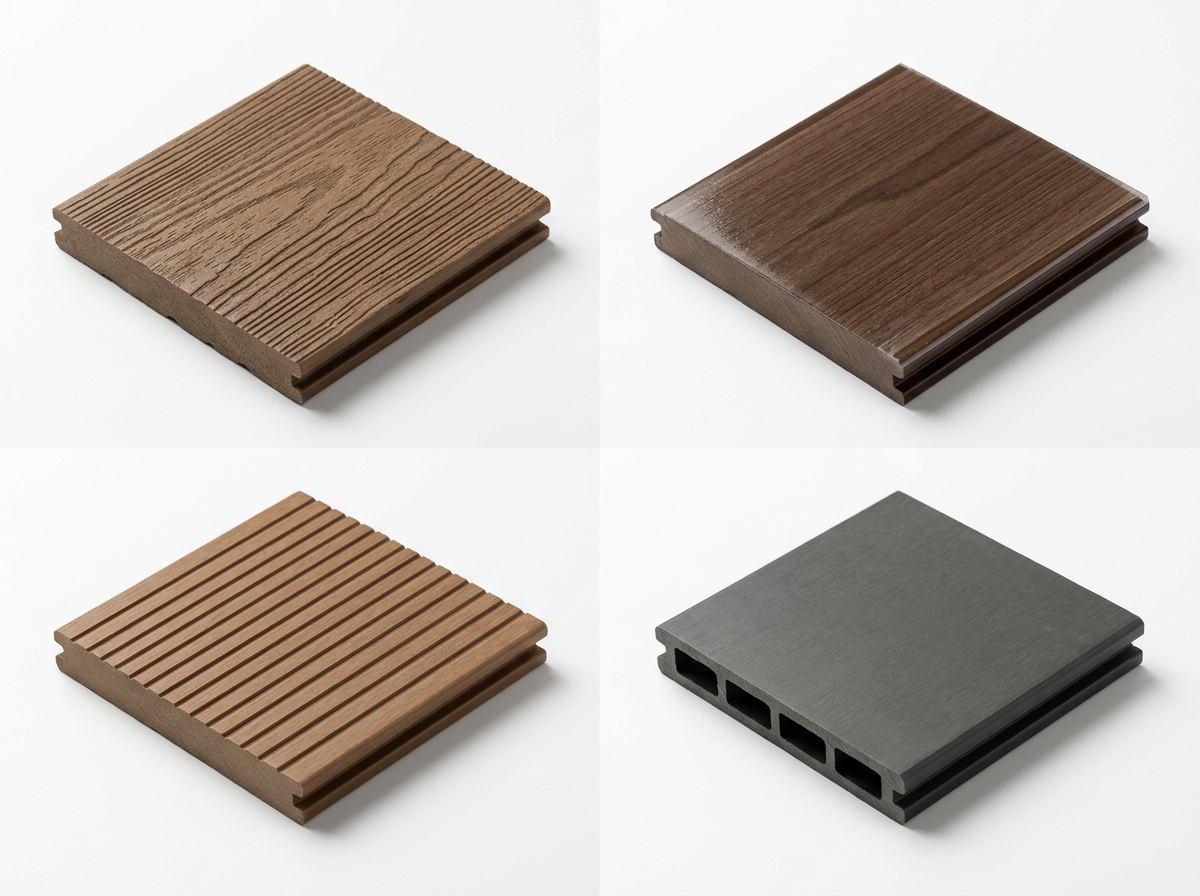
A wholesale distributor in coastal Florida called the engineering team in February 2025 with a problem that had surfaced over the winter rainy season. The uncoupled Wpc Decking the distributor had been sourcing for a beachside condominium project was showing visible edge-swell and buckling at the butt joints. The swelling was most pronounced at the end-grain cuts where the wood fiber was most exposed to water ingress. The condominium had been installed only 14 months earlier. The distributor had assumed that "WPC" was inherently moisture-resistant — the wood fiber and plastic were both somewhat waterproof on their own, so the assumption was reasonable. The assumption was also wrong. Uncoupled WPC has weak interfacial bonding that lets water penetrate along the wood-polymer boundary, and over 14 months of Florida wet-season exposure, that boundary absorbed enough water to produce visible swelling.
The remediation specification the distributor and the engineering team agreed on was a switch to MAH-g-PP coupled WPC at 4% loading — the high-performance WPC decking with enhanced interfacial bonding option. The 4% loading delivers 0.8-1.2% 28-day water immersion swelling rate per EN 15534-1 / ASTM D7032 testing — roughly 50% lower than the uncoupled baseline. The same coupling logic applies to WPC co-extrusion cladding with superior moisture resistance and to any WPC profile that will see direct or indirect water exposure over a multi-year service life. This article walks through the polymer chemistry and the testing standards that anchor the 2% / 4% / 6% MAH-g-PP loading options to specific performance windows.
2. The Wood-Polymer Interface: Why Coupling Agents Are Necessary
WPC composites are an intimate blend of wood fiber (40-60% by weight in a typical formulation) and thermoplastic polymer (polypropylene, polyethylene, or PVC). The wood fiber provides stiffness, dimensional stability, and a natural tactile feel. The polymer provides moisture resistance, processing flexibility, and impact resistance. The two materials are chemically incompatible at the molecular level: wood fiber is hydrophilic (water-loving), while polyolefin polymers are hydrophobic (water-repelling). When mixed in the melt state without a coupling agent, the wood fiber and polymer form a heterogeneous blend with weak interfacial adhesion — the wood fiber particles are essentially embedded in the polymer matrix but not chemically bonded to it.
2.1 The Van Der Waals Default
Uncoupled WPC relies on van der Waals interactions at the wood-polymer interface — weak physical attractions that are sufficient for initial composite performance but break down under sustained stress, thermal cycling, and water immersion. The van der Waals interface is permeable to water molecules, which diffuse along the wood-polymer boundary over time. The water ingress produces two effects: swelling of the wood fiber (the hydrophilic cellulose absorbs water and expands), and debonding at the interface (the water molecules displace the polymer-wood contact). Both effects contribute to the swelling and buckling observed in the Florida condominium case.
2.2 The Covalent Bond Alternative
Coupling agents like MAH-g-PP create covalent chemical bonds at the wood-polymer interface, replacing the weak van der Waals interaction with a strong ester linkage. The maleic anhydride groups on the coupling agent react with the hydroxyl groups on the wood fiber surface to form ester bonds, while the polypropylene backbone of the coupling agent entangles with the bulk polypropylene matrix. The result is a continuous chemical bridge between wood fiber and polymer — water molecules cannot easily diffuse along the interface because there is no longer a hydrophilic-hydrophobic boundary to migrate through.
3. MAH-g-PP: The Industry Standard Coupling Agent
MAH-g-PP (maleic anhydride grafted polypropylene) is the most widely used coupling agent in polypropylene-based WPC. The maleic anhydride is grafted onto the polypropylene backbone in a separate reactive extrusion step, typically at 1-2% MAH content by weight of the final coupling agent. The MAH-g-PP coupling agent is then added to the WPC formulation at the desired loading (2%, 4%, 6%) during the main compounding step. The MAH-g-PP loading determines the total number of maleic anhydride functional groups available to bond with wood fiber surfaces.
3.1 Why MAH-g-PP Over Silane or Other Coupling Agents
Several coupling agent chemistries have been used in WPC composites. Silane coupling agents (3-aminopropyltriethoxysilane, etc.) are common in glass fiber reinforced composites but are less effective in polypropylene-based WPC because the silanol groups react poorly with polypropylene. Epoxy-functional coupling agents offer good bonding but are more expensive and more difficult to process. MAH-g-PP offers the best balance of effectiveness, cost, and processing compatibility for polypropylene-based WPC — the combination of factors that has made it the industry default.
3.2 The MAH Grafting Process
The MAH grafting process is a reactive extrusion step where maleic anhydride monomer, polypropylene, and a peroxide initiator are fed into a twin-screw extruder. The peroxide initiator generates free radicals that activate the polypropylene backbone and the maleic anhydride monomer, which then graft together. The grafting yield is typically 0.8-1.5% MAH content by weight of the final MAH-g-PP coupling agent. The MAH content determines the number of reactive functional groups available per unit mass of coupling agent.
4. The Three Loading Options: 2%, 4%, 6%
The 2% / 4% / 6% loading options are not arbitrary — they correspond to three distinct performance windows validated by EN 15534-1 and ASTM D7032 testing. Each loading delivers a different interfacial bond strength and a different 28-day water immersion swelling rate.
4.1 The 2% Loading: Cost-Effective Baseline
The 2% MAH-g-PP loading delivers approximately 1.5-2.0% 28-day water immersion swelling rate per EN 15534-1 testing and an interfacial bond strength of approximately 12-15 MPa per ASTM D790 flexural testing. The 2% loading is the cost-effective baseline for WPC products with moderate moisture exposure — interior applications, protected exterior installations, and short-service-life exterior applications. The 2% loading covers approximately 85-90% of wood fiber surface area; the residual uncoupled zones are isolated rather than interconnected, limiting water ingress pathways.
4.2 The 4% Loading: Industry Standard
The 4% MAH-g-PP loading delivers approximately 0.8-1.2% 28-day water immersion swelling rate and an interfacial bond strength of approximately 25-30 MPa per ASTM D790. The 4% loading is the industry standard for exterior WPC decking and cladding — the loading the engineering team uses as the default specification for products that will see multi-year exterior exposure across Europe, North America, and the Asia-Pacific region. The 4% loading covers approximately 95-98% of wood fiber surface area; residual uncoupled zones are minimal and do not provide significant water ingress pathways.
4.3 The 6% Loading: High-Performance Specification
The 6% MAH-g-PP loading delivers approximately 0.5-0.8% 28-day water immersion swelling rate and an interfacial bond strength of approximately 32-38 MPa per ASTM D790. The 6% loading is the high-performance specification for WPC products in extreme moisture environments — ground-contact applications, marine-adjacent installations, submerged structural profiles, and projects with 25+ year service-life requirements. The 6% loading covers essentially 100% of wood fiber surface area; additional MAH-g-PP above 6% contributes minimal bond strength improvement because there is no additional wood fiber surface to bond with.
5. ASTM D7032 and EN 15534-1: The Performance Windows
The 2% / 4% / 6% loading options are validated against two international standards that define the test methods and pass/fail criteria for WPC composites. The standards are referenced in procurement specifications across Europe (EN 15534-1) and North America (ASTM D7032).
5.1 EN 15534-1 Composites from Natural Fiber / Plastic
EN 15534-1 is the European standard for composites made from natural fibers and thermoplastics. The standard specifies test methods for mechanical properties (flexural strength, tensile strength, impact resistance), moisture resistance (28-day water immersion swelling rate), weathering performance (ISO 4892-2 Xenon arc), and durability (freeze-thaw cycling, biological resistance). EN 15534-1 Class 1, Class 2, and Class 3 thresholds define the performance windows for residential, commercial, and heavy-duty WPC applications respectively.
5.2 ASTM D7032 Wood-Plastic Composite Deck Boards
ASTM D7032 is the North American standard for establishing performance ratings for wood-plastic composite deck boards and guardrail systems. The standard references ASTM D790 (flexural testing), ASTM D7031 (mechanical properties), and ASTM D570 (water absorption). The 28-day water immersion swelling rate threshold in ASTM D7032 is calibrated against the same performance windows as EN 15534-1, with minor differences in specimen geometry and conditioning protocols.
5.3 The 28-Day Water Immersion Test Protocol
The 28-day water immersion test protocol per EN 15534-1 / ASTM D7032 is the industry standard for moisture resistance validation. Sample coupons (typically 50mm x 50mm x profile thickness) are conditioned at 23°C / 50% relative humidity to equilibrium weight, then immersed in distilled water at 23°C for 28 days. Weight gain and dimensional change (thickness, width, length) are measured at 1, 3, 7, 14, and 28 days. The 28-day swelling rate is reported as percentage thickness change, percentage weight gain, and percentage width change. Lower values indicate better moisture resistance.
6. Performance Tradeoffs: Bond Strength vs Swelling Rate vs Cost
The 2% / 4% / 6% loading options present a clear engineering tradeoff between interfacial bond strength, 28-day water immersion swelling rate, and cost. Procurement specifications should select the loading that matches the project service-life requirement and the moisture exposure environment.
6.1 The Bond Strength vs Loading Curve
The bond strength vs loading curve shows a steep improvement from 2% to 4% loading (approximately 2-3x bond strength increase), followed by diminishing returns from 4% to 6% (approximately 1.2-1.4x additional increase). The diminishing returns above 4% loading reflect the saturation of wood fiber surface area — once the surface is fully covered with MAH groups, additional coupling agent cannot find bonding sites. The 4% loading represents the engineering optimum where bond strength gains are maximal before diminishing returns set in.
6.2 The Swelling Rate vs Loading Curve
The swelling rate vs loading curve shows similar saturation behavior. The 28-day swelling rate drops from 1.5-2.0% at 2% loading to 0.8-1.2% at 4% loading (a 40-50% reduction), then to 0.5-0.8% at 6% loading (an additional 30-40% reduction). Above 6%, the swelling rate continues to drop but the absolute change is small (less than 0.1% per additional 1% MAH-g-PP loading). For projects with strict swelling rate requirements (submerged applications, ground-contact installations), 6% loading may be necessary; for typical exterior decking, 4% loading is sufficient.
6.3 The Cost vs Loading Curve
The cost vs loading curve shows approximately linear cost increase with MAH-g-PP loading because MAH-g-PP is more expensive than bulk polypropylene. Approximate cost premium: 2% MAH-g-PP adds 4-6% to bulk polymer cost; 4% adds 8-12%; 6% adds 12-18%. The cost premium is justified by the performance gains: 4% loading delivers 2-3x the bond strength and 40-50% lower swelling rate versus 2%. For projects where the warranty term is governed by moisture resistance (EN 15534-1 Class 2 or Class 3), the 4% loading is the cost-optimal selection.
7. Procurement Specifications for MAH-g-PP Loading
Procurement specifications for WPC composite products should call out the MAH-g-PP loading explicitly, with the project moisture exposure as the primary specification driver. A specification that reads only "WPC composite" is insufficient — the coupling agent loading is the engineering lever, and the wrong selection leads to premature warranty claims on moisture-related performance.
7.1 Specification Template for Residential Projects
Residential projects with moderate moisture exposure (single-family homes, multi-unit residential developments, residential decking and cladding) should specify 4% MAH-g-PP loading as the baseline. The specification should call out: MAH-g-PP loading 4% ±0.5% tolerance, FTIR verification of MAH content per batch, 28-day water immersion swelling rate ≤1.2% per EN 15534-1 / ASTM D7032, flexural strength ≥25 MPa per ASTM D790, and third-party test certificate from an accredited lab. Reach out to the engineering team through the contact page to request coupling agent formulation and swelling test data for residential project specifications.
7.2 Specification Template for Commercial and Municipal Projects
Commercial and municipal projects with high moisture exposure (commercial property developments, public infrastructure, waterfront installations) should specify 6% MAH-g-PP loading. The specification should call out: MAH-g-PP loading 6% ±0.5% tolerance, 28-day water immersion swelling rate ≤0.8% per EN 15534-1 / ASTM D7032, flexural strength ≥30 MPa per ASTM D790, freeze-thaw cycling compliance per EN 15534-1 Class 3, and 25-year manufacturer warranty documentation. The 6% loading carries a 12-18% cost premium over the 4% baseline, justified by the warranty term extension.
7.3 Specification Template for Interior and Protected Exterior
Interior applications and protected exterior installations with low moisture exposure (interior decorative profiles, protected exterior cladding, covered outdoor installations) should specify 2% MAH-g-PP loading as the cost-optimal baseline. The specification should call out: MAH-g-PP loading 2% ±0.5% tolerance, 28-day water immersion swelling rate ≤2.0% per EN 15534-1, flexural strength ≥12 MPa per ASTM D790, and 10-year manufacturer warranty documentation. The 2% loading delivers a 4-6% cost saving versus the 4% loading for projects where the moisture exposure does not justify the higher specification.
8. Quality Control on the Production Line
MAH-g-PP loading uniformity and bond strength performance are the two most common QC failure modes in WPC production. Production lines must verify MAH-g-PP loading on each batch (typically via FTIR spectroscopy) and verify bond strength performance via periodic flexural testing on sample coupons.
8.1 FTIR Verification of MAH Loading
FTIR (Fourier Transform Infrared) spectroscopy is the standard analytical method for MAH loading verification. The maleic anhydride carbonyl stretch at 1785 cm⁻¹ is the analytical signature — the peak intensity is proportional to the MAH content in the sample. Production line samples are pressed into thin films and analyzed against a calibration curve established with known MAH-g-PP standards. Out-of-spec samples trigger formulation adjustment (MAH-g-PP feeder rate, bulk polypropylene feeder rate) before the batch is released.
8.2 Flexural Testing for Bond Strength
Flexural testing per ASTM D790 is the standard mechanical test for WPC bond strength. Sample coupons (typically 130mm x 13mm x profile thickness) are tested in 3-point bending at a controlled crosshead speed. The flexural strength and flexural modulus are calculated from the load-deflection curve. Production line samples are tested weekly (or per-batch for premium products); out-of-spec samples trigger formulation review and possible batch rejection.
8.3 Third-Party Certification
Annual third-party certification to EN 15534-1 Class 1 / Class 2 / Class 3 thresholds is the industry standard for MAH-g-PP coupled WPC manufacturers. The certification is performed at accredited labs (Intertek, SGS, TUV) using the standardized test methods. The certification report is the warranty documentation that the manufacturer provides to distributors and end customers. Reach out to the engineering team through the contact page for batch-specific test reports and EN 15534-1 compliance documentation.
Frequently Asked Questions
Q1. What does MAH-g-PP coupling agent do in WPC composites?
MAH-g-PP (maleic anhydride grafted polypropylene) bridges the chemical gap between hydrophilic wood fiber and hydrophobic polypropylene. The maleic anhydride groups react with hydroxyl groups on wood fiber to form ester bonds, while the polypropylene backbone entangles with bulk PP matrix. The covalent bond replaces weak van der Waals interaction, dramatically improving interfacial bond strength and reducing water immersion swelling rate by blocking water ingress along the wood-polymer boundary.
Q2. Why is 2% MAH-g-PP the minimum effective loading?
Below 2%, MAH groups cannot fully cover wood fiber surface in typical 40-60% wood fiber WPC. At 1% loading, MAH covers 60-70% of surface; uncoupled zones remain. At 2%, coverage rises to 85-90%, residual uncoupled zones are isolated rather than interconnected, dramatically reducing water ingress. Below 2% shows diminishing returns on interfacial bond strength and swelling rate.
Q3. What is the optimal MAH-g-PP loading for WPC decking?
Optimal loading depends on application: 2% for interior/protected exterior (low water exposure); 4% for exterior decking/cladding (EN 15534-1 Class 1-2, industry standard); 6% for high-moisture environments including ground-contact, marine-adjacent, submerged (Class 3, ASTM D7032 heavy-duty). 4% is the engineering optimum where bond strength gains and swelling reductions are maximal before diminishing returns.
Q4. How is 28-day water immersion swelling rate measured?
28-day swelling rate is measured per ASTM D7032 / EN 15534-1. Sample coupons (50mm x 50mm x thickness) are conditioned at 23°C / 50% RH to equilibrium, then immersed in distilled water at 23°C for 28 days. Weight gain and dimensional change (thickness, width, length) are measured at 1/3/7/14/28 days. Industry benchmarks: 2% loading yields 1.5-2.0% thickness swelling; 4% yields 0.8-1.2%; 6% yields 0.5-0.8%.
Q5. Does higher MAH-g-PP loading affect the cost of WPC significantly?
Yes. MAH-g-PP is 4-8x the cost of bulk polypropylene. Approximate cost premium: 2% adds 4-6%; 4% adds 8-12%; 6% adds 12-18%. The premium is justified by 2-3x bond strength and 40-50% lower swelling rate at 4% loading versus 2%. For exterior decking where moisture resistance drives warranty term, 4% loading is the industry-standard cost-performance optimum.
Q6. Can MAH-g-PP coupling agent be tested on production batches?
Yes. QC processes include: (1) per-batch MAH-g-PP loading verification via FTIR (MAH carbonyl stretch at 1785 cm⁻¹); (2) per-batch interfacial bond strength via tensile or flexural testing; (3) quarterly 28-day water immersion swelling rate per EN 15534-1 / ASTM D7032; (4) annual third-party certification to EN 15534-1 Class 1/2/3 thresholds. Contact the engineering team for batch-specific test reports.