




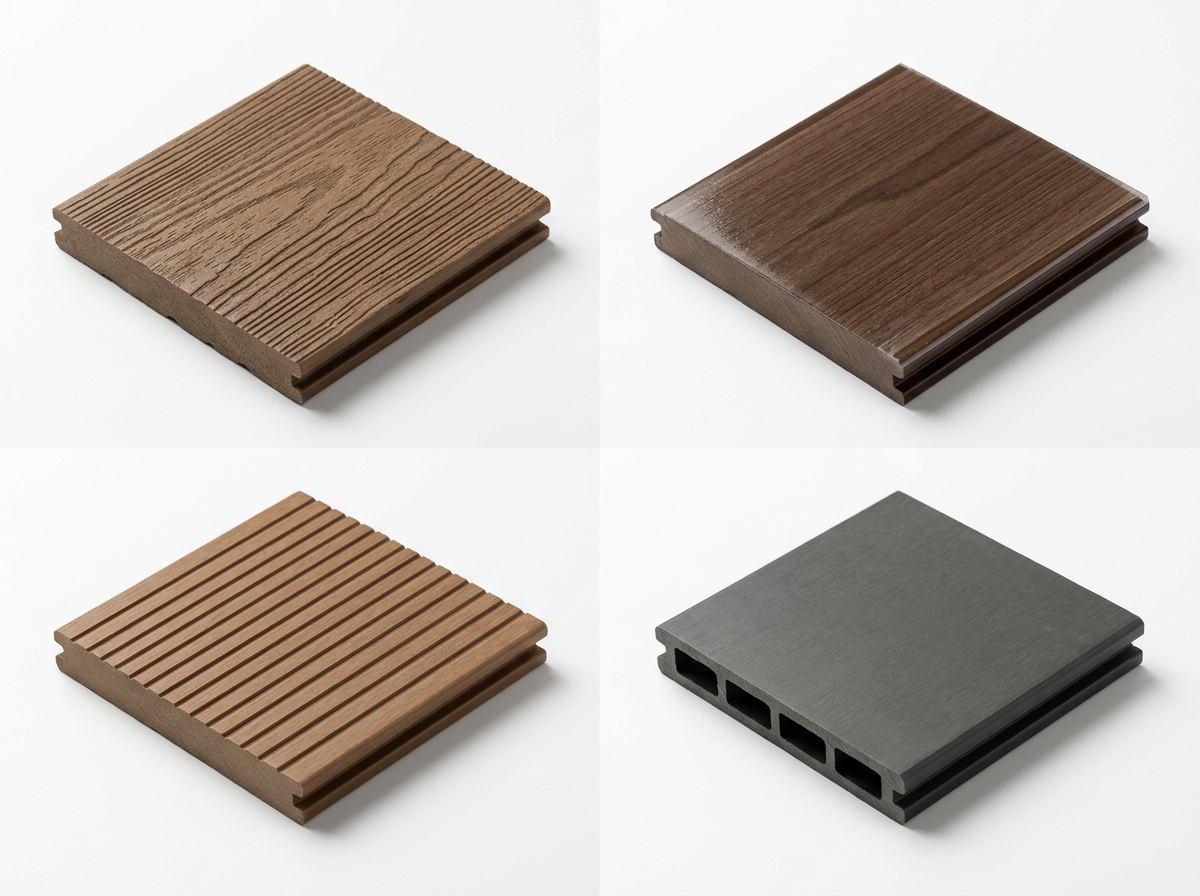




- WPC fencing works well for schools and communities because it balances appearance, durability, and low maintenance.
- Performance depends more on the full system than the panel alone: posts, fasteners, and foundation details matter.
- For public projects, fire behavior, slip resistance near wet zones, and UV stability should be evaluated before purchase.
- Compared with painted timber, WPC usually reduces repainting, sealing, and rot-related repair cycles.
- For procurement teams, sample testing and lifecycle cost comparison are more useful than judging only by initial price.
WPC fencing for schools and community boundary enclosures is attractive because it combines the look of timber with the moisture resistance and low-maintenance profile of a composite material, and outdoor composite systems are often specified to support service life under repeated exposure to rain, sunlight, and temperature changes. In practice, that matters most in child-facing and resident-facing spaces, where WPC fence panels, slot posts, and coordinated WPC cladding can create a consistent boundary line without the repainting burden of timber. For material selection, buyers should also review recognized test methods such as ASTM D7031 for wood-plastic composite performance guidance and surface exposure checks under realistic project conditions.
Why WPC fencing fits school boundary fence and community enclosure projects
WPC fencing fits public boundary projects because it solves the two problems most stakeholders care about: appearance over time and maintenance burden.
Schools want perimeter systems that feel safe and orderly without looking harsh, while community managers want a fence that keeps a clean appearance through multiple seasons of rain, dust, and UV exposure. A composite fence is often chosen for exactly that reason, especially where the project brief includes pedestrian comfort, landscape coordination, and predictable upkeep.
In many boundary applications, the real value is not just material strength. It is the ability to hold color, resist decay, and avoid the repeated sanding, sealing, and repainting that timber usually needs. That is why WPC fencing is frequently paired with WPC decking or wall panel systems in projects that aim for a unified outdoor design language.
WPC fencing performance factors that matter in public spaces
The fence system is only as reliable as the weakest component in the assembly.
For schools and community enclosures, buyers should evaluate posts, caps, fixings, panel thickness, and ground anchoring, not only the surface texture. A well-designed system distributes wind load across the posts and fasteners, which is especially important in long boundary runs and open corners.
| Evaluation item | Why it matters | Typical project check |
|---|---|---|
| Panel thickness | Influences stiffness and impact resistance | Compare 20 mm, 25 mm, and 30 mm options |
| Post system | Controls alignment and wind stability | Check slot depth and embedded foundation detail |
| Surface finish | Impacts slip, dirt visibility, and appearance | Confirm embossed or co-extruded cap layer |
| Fastener material | Protects against corrosion and loosening | Use corrosion-resistant hardware for outdoor exposure |
One practical benchmark many procurement teams use is not decorative appeal but dimensional consistency. In public projects, even a small height variation becomes noticeable along a long fence line. That is why project teams often request tolerance control, sample approval, and on-site mock-up installation before full delivery.
For design references, the dimensional behavior of outdoor profile systems is often discussed alongside general tolerance guidance in ISO 1302 surface specification practices and site verification routines, even when the final acceptance criteria come from the local project specification rather than the standard itself.
Is WPC fencing safe enough for schools and communities?
WPC fencing can be suitable for schools and communities when the full system is designed around safety, not just appearance.
The first safety issue is edge quality. A school boundary fence should avoid sharp metal projections, loose top edges, or brittle accessories that could cause contact injury. The second issue is structural security. Community enclosures need stable posts and predictable panel fixation so that routine impact, pushing, and weather loading do not create loose sections over time.
The third issue is fire and compliance review. Public buyers should confirm whether the project requires a fire-performance classification, because enclosure systems are sometimes installed near buildings, corridors, or evacuation routes. Fire behavior requirements vary by region, but documentation should always be checked before specification.
| Safety topic | What to verify | Buyer action |
|---|---|---|
| Contact safety | No exposed sharp points or burrs | Review finished edge samples |
| Structural stability | Post spacing and anchoring method | Request installation drawing |
| Surface texture | Grip and dirt retention | Compare smooth and embossed options |
| Compliance file | Material declaration and test reports | Ask for third-party documentation |
For fire-related review, project teams often reference material classification systems such as NIST Fire Research for test-method understanding and local code interpretation, although the final acceptance standard depends on the jurisdiction and building type.
WPC fencing vs timber vs metal for community enclosure projects
WPC fencing is most competitive when a project needs a natural look without the maintenance schedule of timber or the visual hardness of metal.
Compared with timber, WPC usually offers better resistance to moisture-driven swelling, surface decay, and insect attack. Compared with metal, it is less likely to create an institutional look, which is one reason landscape architects often prefer it for schools, parks, and residential estates.
| Material | Appearance | Maintenance load | Typical strength profile | Best fit |
|---|---|---|---|---|
| WPC fencing | Wood-like and uniform | Low | Moderate to high, system dependent | Schools, estates, parks |
| Timber | Natural and warm | High | Moderate, moisture sensitive | Decorative projects with maintenance budget |
| Metal fencing | Strict and industrial | Low to moderate | High | Security-focused boundaries |
That said, WPC is not automatically the best choice for every enclosure. If the project requires very high anti-climb security, high impact resistance, or strict transparent visibility, another system may be better. The most effective approach is to match the fence to the function of the boundary, not only the material category.
For teams comparing outdoor performance categories, the building-products perspective in ISO 4892-2 is useful because accelerated xenon-arc exposure helps frame how UV resistance is assessed for polymer-based outdoor materials.
Color stability, UV exposure, and long-term appearance
Long-term appearance is one of the main reasons schools and communities choose WPC fencing.
Outdoor surfaces age under sunlight, and color change becomes obvious on long, continuous boundary runs. Co-extruded WPC systems typically perform better in stain resistance and surface protection because the cap layer reduces direct exposure of the core to weather and everyday dirt.
In a school environment, this matters because hand contact, dust, and cleaning chemicals are common. In a community boundary, the issue is more about keeping a uniform, well-maintained impression across large visible areas. A fence that looks neat after repeated weather cycles supports perceived property quality and reduces complaint frequency from residents.
| Exposure factor | Risk to appearance | Mitigation |
|---|---|---|
| UV light | Fade and color drift | Choose co-extruded surface protection |
| Rain and splash | Staining and moisture ingress | Use low-absorption composite profile |
| Dust and pollution | Visible grime | Prefer smooth cleanable finish |
| Repeated cleaning | Surface wear over time | Confirm washability and care instructions |
For UV testing language, procurement teams can review ASTM G154, which covers fluorescent UV exposure of nonmetallic materials and is commonly used to discuss comparative weathering behavior.
Installation details that affect school boundary fence performance
Installation quality often determines whether WPC fencing feels premium or problematic after the first season.
The most common issue is not material failure but poor alignment, inconsistent post depth, or unsuitable ground preparation. A community enclosure on uneven soil needs different footing treatment than a short decorative border, and a school perimeter near high traffic areas may need stronger base fixing at gates and corners.

- Set post centers according to the approved drawing, not by visual estimate.
- Use a level and check each post before panel insertion.
- Leave expansion allowance where the profile system requires it.
- Confirm gate zones, corner zones, and slope transitions before full installation.
- Perform a hand inspection after fastening to detect looseness or rubbing.
In practical terms, the best installation teams treat the fence as a system of coordinated parts. This is why buyers should ask for a complete package, including installation accessories, rather than purchasing panels alone and solving the structural details later.
For dimensional and loading discussions in technical procurement, public projects often rely on project-specific calculations rather than a single universal number, but the engineering logic should still be documented in the submittal package.
How procurement teams should evaluate WPC fencing for public projects
Procurement teams should compare lifecycle cost, not just unit price.
A low initial quote can become expensive if the product requires early replacement, constant cleaning, or repeated repainting. In a school or community setting, labor costs often exceed material savings over time because access restrictions make maintenance slower and more disruptive.
| Procurement question | What to request | Decision impact |
|---|---|---|
| How stable is the color? | Outdoor exposure data and sample photos | Reduces appearance risk |
| How long is the service life? | Warranty terms and maintenance guidance | Helps lifecycle cost planning |
| How easy is replacement? | Spare part list and panel format | Improves repair speed |
| Can it meet project codes? | Test reports and material declaration | Supports compliance review |
A useful comparison method is to calculate the fence over the expected replacement cycle. If a timber fence needs repainting or repair more often than a composite fence, the labor difference can outweigh the original price gap. That is especially relevant in public areas where maintenance access may be limited to school holidays or scheduled municipal windows.
For buyers who need a product family overview before specifying boundary systems, the fence category page is the right starting point, while larger site-wide projects may also benefit from reviewing factory capabilities and quality-control documentation.
Real-world use cases for community enclosure and school boundary fence planning
WPC fencing performs best in spaces where visual comfort and controlled access matter together.
Typical use cases include kindergarten perimeters, school playground borders, residential estate lines, public garden enclosures, pedestrian buffer walls, and low- to mid-security boundary screening. In all of these, the goal is not to create a fortress. The goal is to establish clear separation while keeping the environment friendly and well maintained.
One common scenario is a school that wants a softer boundary than metal mesh. Another is a community manager replacing weathered timber with a more stable enclosure that fits a landscaped entrance. In both cases, WPC can deliver a consistent look across long runs and reduce the burden of recurring surface treatment.
When the project also needs visual screening, teams may combine fencing with panel variants or adjacent privacy screen elements to manage sightlines without overbuilding the perimeter.
Common mistakes when choosing WPC fencing for schools and communities
Most fence failures begin with specification mistakes, not with the composite itself.
- Choosing a decorative profile for a wind-exposed boundary without checking post spacing.
- Ignoring gate hardware quality and expecting the fence panels to solve structural problems.
- Comparing only purchase price and not the maintenance burden over five to ten years.
- Skipping sample review and discovering color mismatch after installation.
- Assuming every Wpc Fence is equally weather resistant without checking surface technology.
To avoid those problems, buyers should request a sample kit, verify the connection detail, and confirm whether the product is classic WPC or co-extruded WPC. That distinction matters because a protected surface layer typically improves staining resistance and simplifies cleaning in public environments.
For project teams building a broader exterior package, reviewing related product families such as WPC railing can help maintain visual continuity across terraces, ramps, and boundary areas.
FAQ about WPC fencing for schools and community boundary enclosures
Is WPC fencing a good choice for school playground boundaries?
Yes, if the design prioritizes safe edges, stable posts, and low maintenance. It is especially useful where a softer visual look is preferred over metal.
How long does WPC fencing last outdoors?
Service life depends on formulation, UV protection, installation quality, and maintenance, so buyers should rely on supplier test data and warranty terms rather than a single universal claim.
Does WPC fencing need painting or sealing?
No, that is one of its main advantages. Routine cleaning is usually enough, which reduces labor compared with timber.
Can WPC fencing handle rain and humidity?
Yes. Moisture resistance is one of the main reasons it is used in outdoor boundary projects, especially in humid or rainy regions.
Is WPC fencing better than metal for community enclosures?
It depends on the goal. WPC is better for a natural, residential feel, while metal is usually better for higher-security or more industrial-looking applications.
What should schools check before ordering WPC fence panels?
They should check panel thickness, post system, color stability, installation method, and documentation for outdoor weathering and compliance.
Can WPC fencing be used with other WPC products on the same site?
Yes, and that is often a smart design choice. Matching fence, decking, and Wall Panel finishes can create a unified campus or community appearance.