




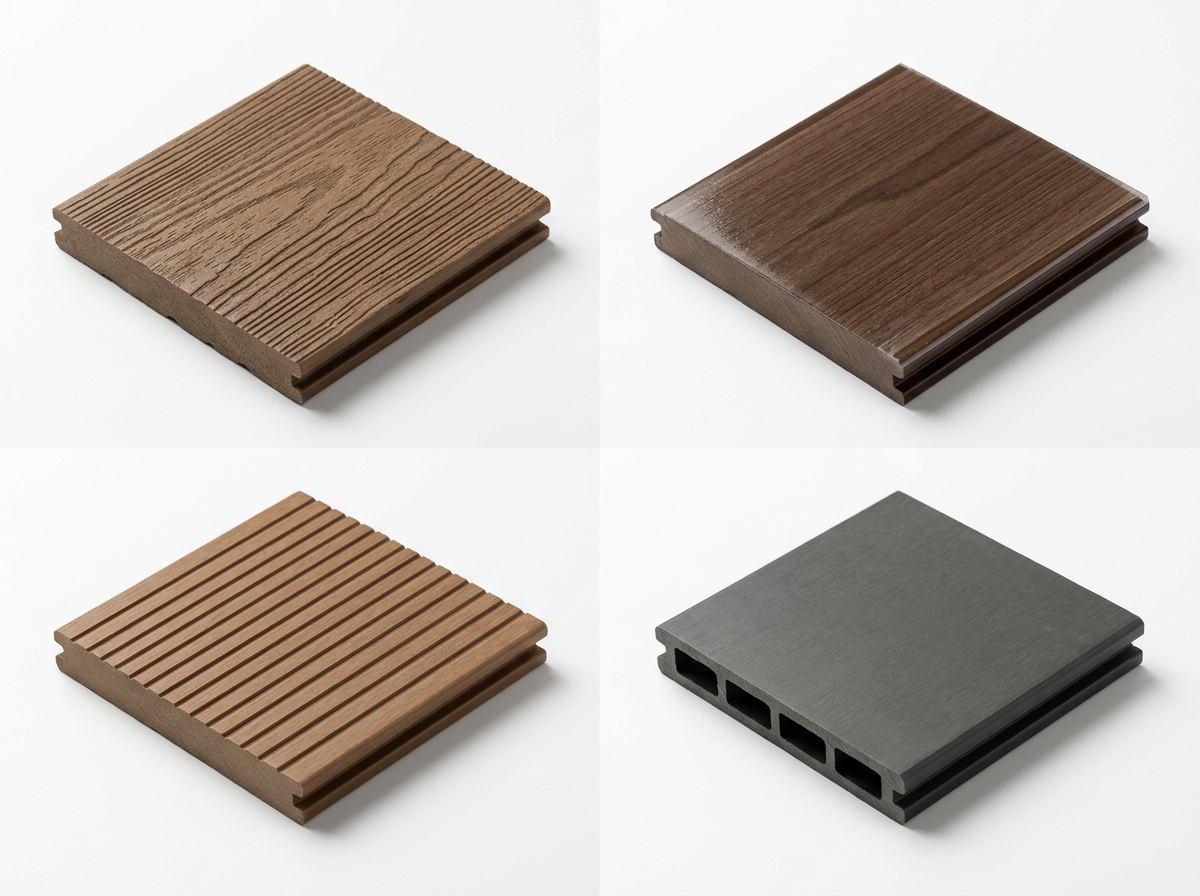




- 3D embossing improves realism and traction, but surface protection determines long-term appearance.
- Climate, UV exposure, and moisture level should guide material and profile selection.
- Lifecycle cost is often lower than timber because WPC avoids frequent painting, sealing, and anti-rot treatment.
- Project buyers should request test reports, sample boards, and installation guidance before purchase.
WPC 3D embossed deckingremains one of the most practical Outdoor Flooring choices in 2026 because it combines wood-like aesthetics with composite durability, and the strongest products are designed around measurable performance, not just visual appeal. Outdoor deck systems are often assessed against real standards such asASTM D7031 for structural profiles and ASTM D7032 for wood-plastic composite deck boards, while UV and weathering behavior is commonly checked with methods such as ASTM G154. For procurement teams, that means the right decision is less about choosing the darkest color or deepest embossing and more about verifying surface protection, installation tolerance, and the board’s ability to stay stable in sun, rain, and repeated foot traffic. If you are comparing product lines, it is useful to review related systems such as WPC decking, co-extrusion WPC decking, and WPC wall panel before finalizing the deck specification.
Why WPC 3D embossed decking matters for outdoor projects in 2026
WPC 3D embossed decking matters because outdoor buyers now expect both visual realism and measurable performance from one material system. In residential and commercial outdoor spaces, the deck is no longer just a walking surface; it shapes the entire impression of a terrace, pool edge, garden path, or hospitality patio. 3D embossing adds depth to the grain pattern, which helps the board look more like natural timber under daylight and makes the surface easier to specify for design-led projects.
The practical value goes beyond aesthetics. WPC, or wood plastic composite, is built from wood flour or wood fiber combined with polymer binders, which is why it is commonly selected for areas where natural wood would need repeated sealing, staining, and rot protection. In wet or humid environments, that matters. The material is widely used in decking, cladding, fencing, and hoarding because it supports low-maintenance outdoor use, and that same logic is why many buyers evaluate it as a long-term investment rather than a simple finish material.
For international procurement teams, the phrase 2026 decking usually implies a broader buying model: fewer maintenance visits, more consistent supply, better color stability, and stronger documentation. That is especially true for landscape contractors, hospitality developers, and municipal projects where appearance, safety, and service life all affect total cost.
What to compare first in WPC 3D embossed decking selection
The first comparison should be structure, not color, because board construction drives most real-world performance. Buyers often start with the grain pattern, but the most meaningful differences are core density, cap layer protection, board profile, and fastening system. A 3D embossed surface may look premium, but if the product has weak stain resistance or poor UV protection, the finish can age faster than expected.
| Comparison factor | What to ask for | Why it matters | Typical buyer risk |
|---|---|---|---|
| Surface structure | 3D emboss depth, capped or uncapped finish | Controls realism, stain resistance, and cleaning effort | Premium look with weak durability |
| Board profile | Solid, hollow, or reinforced hollow | Affects load capacity, weight, and installation speed | Wrong board for traffic level |
| Color stability | UV test data and weathering report | Determines long-term appearance under sun exposure | Fast fading in exposed zones |
| Slip behavior | Wet-surface performance data | Important for pool decks and public walkways | Safety complaints after installation |
Surface protection is often the main divider between standard WPC and premium Outdoor Decking. Classic WPC is valued for affordability and natural appearance, while co-extruded products typically add a protective shell that improves stain resistance, anti-fouling behavior, and fade resistance. For buyers, that usually changes the maintenance budget more than the purchase price does. If a project has heavy foot traffic, food spills, or prolonged UV exposure, the cap layer can be a better economic choice even when the initial unit cost is higher.
That distinction matters in public-facing spaces. On a commercial café terrace, for example, frequent cleaning and daily exposure make discoloration more visible. On a private garden deck, visual realism may be the top priority. In both cases, the best product is the one that matches the site’s real stress profile.
How 3D embossing changes performance, not just appearance
3D embossing improves both tactile realism and grip, but the benefit depends on the emboss design and the board’s surface finish. Deep embossed textures break up reflections, which can make the deck look closer to natural timber in sunlight. They also create micro-variation in the walking surface, which can help traction in damp conditions. For poolside and garden applications, that combination is one reason 3D embossed boards are frequently preferred over flat-surface composites.
However, embossing is not automatically better. If the texture is too aggressive, dirt can accumulate in the grooves and make cleaning harder. If it is too shallow, the board may look flat and less premium. The ideal pattern is usually a balanced grain that looks natural at standing distance but still allows broom cleaning and regular wash-down. That balance is especially important in commercial settings, where maintenance time affects operating cost.
Material tests should therefore focus on the complete system: surface pattern, cap layer quality, base density, and installation spacing. A good visual sample is useful, but a good field performance record is better.
Which technical standards should guide decking selection in 2026
Standards matter because they turn marketing claims into testable performance requirements. For WPC 3D embossed decking, the most useful references include structural and weathering methods used by product engineers and specifiers. ASTM D7031 is used as a standard practice for establishing performance rating of wood-plastic composite and fiber-plastic composite deck boards, and ASTM D7032 is used for establishing performance ratings for wood-plastic composite and plastic lumber decking boards. For accelerated UV exposure, ASTM G154 is widely used in product testing programs. These standards do not replace project-specific evaluation, but they make supplier claims easier to compare.
| Standard | What it covers | Why it matters for decking |
|---|---|---|
| ASTM D7031 | Performance rating practice for composite deck boards | Helps compare product suitability for structural use |
| ASTM D7032 | Performance rating for composite decking and plastic lumber | Useful for deck board qualification and design review |
| ASTM G154 | Fluorescent UV exposure testing | Supports color stability and weathering assessment |
| ISO 4892-3 | Laboratory light exposure by fluorescent UV lamps | Commonly used to evaluate outdoor material aging |
One reason procurement teams rely on standards is that outdoor durability is difficult to judge by eye. A board may look excellent on day one and still fade, warp, or stain unevenly after a season of exposure. Standards-based reports help reduce that uncertainty by testing repeatable properties instead of subjective appearance.
For project owners, the best approach is to ask the supplier which standard was used, what sample was tested, and whether the tested product matches the exact purchased profile. A report is only meaningful if it belongs to the same board construction you plan to install.
How climate and application change the right decking choice
Climate is the most important context variable in decking selection because outdoor stress is not the same in every region. A board that performs well in a shaded residential patio may behave differently on a south-facing rooftop terrace or a pool deck with frequent wet-dry cycles. Moisture, UV intensity, freeze-thaw exposure, and salt air all influence how the surface ages.
For humid or coastal locations, buyers often prioritize low water absorption, mold resistance, and stain control. For sunny inland projects, color retention and heat management become more important. For public walkways, the main concern may be slip performance and maintenance frequency. That is why a single “best” board does not exist; there is only the best match for a specific use case.
Site type should shape board selection more than marketing claims do. A luxury villa deck may justify a higher-end capped board with deeper embossing, while a large commercial terrace may need a profile that is easier to replace and faster to install. In landscape work, visual harmony matters; in municipal work, supply consistency and service life often rank higher.
- Poolside: prioritize slip resistance, drainage, and stain control.
- Garden terrace: prioritize natural texture and color harmony.
- Commercial patio: prioritize easy cleaning and fade resistance.
- Public walkway: prioritize load-bearing profile and stable fastening.
What installation details affect long-term value
Installation quality often determines whether a good product performs like a premium one. Even the best WPC 3D embossed decking can underperform if spacing, fixing, or substructure design is poor. Composite boards expand and contract with temperature changes, so correct gap allowance and support spacing are critical. Installers should always follow the supplier’s guide for joist spacing, fastener type, and edge clearance.
For B2B buyers, the installation plan should be reviewed before purchase, not after delivery. That is especially true for large terraces, resort decks, and multi-zone projects. In practice, buyers should check the following points:
- Substructure material and corrosion resistance.
- Joist spacing and board support pattern.
- Hidden fastener compatibility.
- Drainage slope and water path.
- Cut edge sealing or finishing requirements.
Hidden fixing systems often improve appearance, but compatibility must be verified first. A board profile that looks excellent in the catalog may be harder to install efficiently if the fastening system is not matched to the groove geometry. Installation time, labor skill, and replacement access all affect lifecycle economics, especially on larger commercial sites.
If your project includes multiple outdoor materials, review WPC fence and WPC hoarding to keep the visual language and maintenance approach consistent across the site.

How to evaluate lifecycle cost, not just unit price
Lifecycle cost is usually the real decision metric, because the cheapest board price can become the most expensive installed solution. When comparing timber with WPC, the purchase price is only one part of the total cost. Maintenance labor, coating materials, replacement frequency, and downtime can shift the economics sharply over time. This is one reason WPC is widely used in projects that want lower upkeep and more predictable service life.
| Cost element | Natural timber | WPC 3D embossed decking |
|---|---|---|
| Initial finishing | Often requires sealing or staining | Usually no painting or staining |
| Routine care | Cleaning, sanding, recoating | Basic washing and periodic inspection |
| Moisture damage risk | Higher in exposed areas | Typically lower due to composite structure |
| Long-term appearance | Can weather unevenly | More stable when UV-protected |
Maintenance reduction is one of the main economic arguments for WPC. In practice, the value comes from fewer site interventions, less downtime, and better appearance retention. For hospitality venues, that can mean fewer guest disruptions. For residential buyers, it means less weekend maintenance. For developers, it means lower complaint rates and a cleaner handover experience.
According to broad industry estimates, composite outdoor products often reduce repainting and refinishing cycles compared with timber-based alternatives, but the real savings depend on climate, cleaning regimen, and traffic load. That is why project owners should calculate cost per square meter over the expected service period, not only the first invoice.
When a sample test is worth more than a catalog sheet
Sample testing is one of the most reliable ways to reduce procurement risk for decking selection. A catalog can describe color, embossing, and profile dimensions, but it cannot fully show how the board behaves under heat, cleaning chemicals, or repeated foot traffic. This is why serious buyers request samples before approving large orders.
A useful sample test should include at least four checks: surface feel, stain cleanup, fit with the chosen fastening system, and color consistency under natural light. If possible, install a short mock-up section outdoors for a few weeks. That small trial often reveals issues that a brochure cannot show, such as glare, heat retention, or how the texture handles dust and water spots.
Field evaluation is especially valuable for design-led projects. Landscape architects and property managers often care as much about visual consistency as they do about mechanics. A good sample lets them judge whether the grain direction, board width, and color tone work with the surrounding stone, metal, glass, or planting scheme.
Common mistakes buyers make when choosing WPC 3D embossed decking
Most purchasing errors happen when buyers confuse appearance quality with long-term performance. The most common mistake is choosing the deepest wood grain without checking cap quality or weathering data. Another is selecting a hollow profile for a high-load area simply because it costs less. A third is ignoring the installation system until after the boards arrive.
- Choosing by color only and ignoring UV test information.
- Using the same board for a private patio and a high-traffic public deck.
- Overlooking joist spacing and expansion allowance.
- Failing to confirm surface cleaning requirements.
- Not requesting a real sample before mass order.
The best procurement process is structured and evidence-led. Buyers should start with the application, then move to performance criteria, then compare profiles and surface systems, and finally approve color and packaging. That sequence avoids the most expensive mistakes.
How to make a confident final choice in 2026
The best WPC 3D embossed decking choice in 2026 is the one that matches climate, traffic, maintenance expectations, and installation capability. If the project is visually demanding, prioritize realistic embossing and color stability. If the project is highly exposed, prioritize capped protection and UV resistance. If the project is cost-sensitive, compare lifecycle cost rather than unit price. If the project is safety-sensitive, ask for slip and weathering data and confirm the installation method.
A practical decision framework is simple:
- Define the site: pool, terrace, walkway, commercial patio, or garden.
- Confirm the stress factors: sun, moisture, traffic, staining risk.
- Check the structure: solid, hollow, or reinforced hollow.
- Verify standards-based test data.
- Request samples and installation guidance.
- Compare total cost over service life.
For most outdoor buyers, WPC 3D embossed decking is not just a design choice; it is a risk-management choice. When specified correctly, it delivers the visual warmth of timber with the practical benefits of a composite system, which is why it continues to gain traction across residential, commercial, and public projects.
FAQ
1. Is WPC 3D embossed decking better than regular WPC decking?
It is often better for visual realism and surface traction, but not automatically better in every project. 3D embossing improves the wood-like look and can help with grip, but the final value depends on cap quality, weathering performance, and cleaning requirements. For exposed outdoor spaces, a protected embossed board is often the stronger choice.
2. Is co-extruded WPC decking worth the extra cost?
It is usually worth it when stain resistance, fade resistance, and easier maintenance matter. Co-extruded boards add a protective outer layer that can improve long-term appearance in high-use or high-sun environments. For low-traffic private areas, standard WPC may still be sufficient.
3. How long does WPC decking usually last?
Service life depends on product quality, climate, and installation, but good composite decking is designed for long outdoor use. Buyers should ask for warranty terms, test reports, and expected maintenance requirements rather than relying on a single lifespan claim.
4. Does WPC decking fade in sunlight?
All outdoor surfaces experience some aging, but UV-protected products usually hold color better. Ask for weathering data based on standards such as ASTM G154 or ISO 4892-3, and compare samples after exposure if possible.
5. Is WPC decking slippery when wet?
Slip behavior depends on texture, surface finish, and cleanliness. Embossed surfaces can improve traction, especially around pools and terraces, but buyers should still verify wet-condition performance for the specific product.
6. What is the best board type for poolside use?
For poolside use, capped WPC with a balanced 3D texture is often the safest and easiest-to-maintain option. The board should support good drainage, easy cleaning, and stable wet traction without trapping too much dirt in the grain.
7. What should I ask the supplier before placing a large order?
You should ask for test reports, profile drawings, installation guidance, sample boards, and warranty terms. If the project is commercial, also ask about supply lead time, batch color consistency, and replacement availability for future maintenance.