




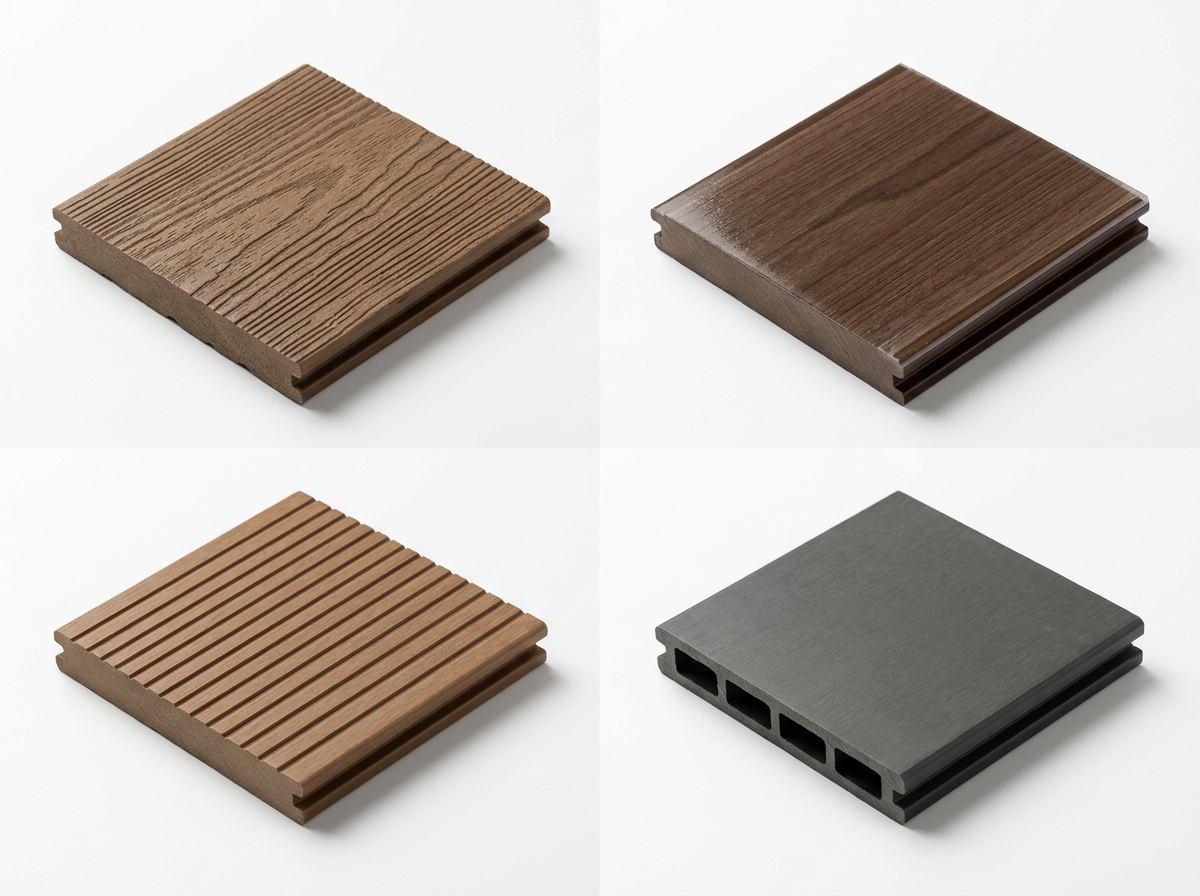




- WPC hoarding is strongest in municipal projects where appearance, moisture resistance, and low maintenance matter.
- For safety-critical zones, the panel material alone is not enough; the frame, base, and fixings determine real performance.
- Compared with wood, WPC reduces repainting and rot-related maintenance, while offering a more consistent look over time.
- Municipal buyers should evaluate wind load, impact risk, fire rules, and cleaning requirements before choosing WPC hoarding.
- A well-designed WPC site barrier can improve project presentation without sacrificing practical site control.
WPC hoarding is often a strong fit for municipal construction sites because it combines outdoor durability with a cleaner public-facing finish, and WPC materials are specifically valued for water resistance, anti-mildew behavior, and lower upkeep than conventional timber. In outdoor engineering, durability is not just about appearance: it is about lifecycle stability, installation speed, and compliance with site safety expectations. For dimensional and performance reference, construction projects commonly align field tolerances with ISO 2768-1 general tolerances and site measurement practices such as ISO 230-1:2022 for precision concepts in controlled work environments, while material selection is often benchmarked against outdoor weathering principles discussed in ASTM D1435-21. If your project needs a broader product mix, you can compare WPC fence systems, WPC cladding panels, and WPC decking before deciding whether hoarding is the right specification.
What WPC hoarding means in municipal construction site barrier planning
WPC hoarding is best understood as a temporary or semi-temporary site barrier designed to separate active construction zones from public areas while maintaining a more refined visual presence than plain metal sheeting or rough timber fencing. In municipal projects, that distinction matters because the barrier is often seen by pedestrians, residents, inspectors, and local authorities every day. A site barrier is no longer just a protective edge; it is part of project communication and public reassurance.
For city road maintenance, utility trenching, sidewalk reconstruction, or landscape renovation, WPC hoarding can help reduce visual clutter and improve neighborhood acceptance. Its wood-like surface also creates a less industrial impression, which is useful near schools, parks, transit corridors, commercial streets, and civic buildings. That said, the right use case depends on whether the main goal is privacy screening, crowd guidance, dust containment, or security separation.
| Site barrier type | Typical strength | Visual quality | Maintenance need | Best municipal use |
|---|---|---|---|---|
| WPC hoarding | Medium to high with frame | High | Low | Public-facing city works |
| Timber hoarding | Medium | Medium | High | Short-duration low-budget works |
| Color-coated steel hoarding | High | Medium | Low to medium | High-security road projects |
| Chain-link barrier | Medium | Low | Low | Fast temporary demarcation |
Why WPC hoarding suits municipal construction sites better than many alternatives
WPC hoarding is attractive for municipal use because outdoor exposure, public visibility, and maintenance limits are all part of the same operating reality. WPC, or wood plastic composite, is typically made from wood fiber or wood flour blended with polymers, which gives it a more stable outdoor profile than untreated timber. For municipal teams, that means fewer issues with swelling, rot, insect attack, and surface deterioration.
One practical advantage is lifecycle control. Municipal contractors often need barriers to survive rain, humidity, dust, and intermittent cleaning without constant repainting. The lower maintenance profile of WPC is especially valuable in projects that last several months or move in phases across multiple streets. The material is also easier to coordinate visually with adjacent landscape elements, which matters when the site sits in a commercial district or heritage-sensitive area.
From a sustainability perspective, WPC also supports procurement narratives focused on resource efficiency and reduced replacement frequency. That does not automatically make it the best choice for every site, but it does make it easier to justify when the project owner wants a balance of function, appearance, and environmental signaling.
Municipal construction site barrier performance factors that matter most
The panel material is only one part of the system; the real performance of WPC hoarding depends on engineering details. Municipal construction zones are exposed to wind, vibration, pedestrian contact, occasional impact, and uneven installation substrates. If the barrier is poorly framed, even a strong panel can underperform.
Three factors usually decide success: panel stiffness, post and rail design, and anchoring. In practical terms, a hoarding system for a city project should be selected as a complete assembly rather than as a decorative panel product. That includes the base connection, corner stability, top rail behavior, and the ease of replacing a damaged section without dismantling the entire line.
| Evaluation factor | Why it matters | What to ask the supplier | Typical risk if ignored |
|---|---|---|---|
| Wind resistance | Urban corridors can channel gusts | Tested panel and post configuration | Racking, loosening, or collapse |
| Impact tolerance | Public areas face accidental contact | Edge reinforcement and fixings | Cracking or panel pull-out |
| Color stability | Long projects stay visible for months | UV performance and surface protection | Patchy fading and inconsistent appearance |
| Cleanability | Dust and signage residue are common | Surface texture and wash-down method | Staining and poor public image |
For outdoor material benchmarking, weathering behavior is often discussed alongside accelerated exposure methods. ASTM D1435 is widely used for natural weathering of plastics, which is relevant when comparing how composite surfaces change under sunlight and moisture over time. In public works, the more important lesson is simple: specify the system for the site condition, not just for the brochure image.
How WPC hoarding compares with wood, metal, and plastic site barriers
WPC hoarding sits in the middle of the material spectrum, which is exactly why it is useful for many municipal jobs. Compared with timber, it typically offers better moisture resistance, less warping, and fewer coating cycles. Compared with metal, it provides a warmer visual finish and lower surface temperature under strong sun in many climates. Compared with plain plastic, it usually feels more rigid and more premium, which can matter in public-facing environments.
The trade-off is that WPC is not automatically the strongest option for high-impact or anti-intrusion applications. When the project is near vehicle lanes, active loading areas, or security-sensitive facilities, a hybrid design may be better: WPC for the visible outer skin, and steel or aluminum for the internal structure. That approach preserves the appearance advantages without overestimating the panel’s standalone strength.
| Material | Outdoor durability | Maintenance level | Visual appeal | Typical best use |
|---|---|---|---|---|
| WPC | High | Low | High | Municipal frontage and public streets |
| Wood | Medium | High | High at first | Short-term low-budget screening |
| Steel | Very high | Low to medium | Medium | Security and heavy-duty perimeter control |
| Plastic sheet | Medium | Low | Low to medium | Fast temporary division |
For municipal buyers, the main decision question is not which material is best in isolation, but which one delivers the right balance of appearance, cost, and serviceability over the project timeline. In many urban projects, WPC is chosen because it avoids the “construction site” look that can undermine public acceptance.
Design details that improve WPC hoarding performance on municipal sites
Good WPC hoarding depends on system design, and design details can make the difference between a professional barrier and a maintenance burden. A stable base is essential, especially where pavement levels vary or where the barrier must be frequently relocated. Strong corner treatment also matters because corners often see the highest loading from handling and wind.
Surface texture is another useful variable. A lightly textured or embossed finish can reduce the appearance of scratches and improve grip during installation. For long public works, color choice should also be practical rather than purely aesthetic. Mid-tone gray, brown, and muted green often hide dust better than bright light colors, while still blending with streetscape elements.
Modern outdoor composite systems often use co-extruded or protected surfaces to improve stain resistance and color retention. While exact performance depends on formulation, the engineering principle is consistent: the outer layer is where weathering starts, so giving that layer more protection usually extends visual life and reduces washing frequency.
- Choose a frame that can handle site wind and accidental leaning.
- Specify replaceable panels so damaged sections can be swapped quickly.
- Confirm the cleaning method before procurement, especially for dusty urban corridors.
- Use corner reinforcements where pedestrian contact is likely.
- Match the finish to the city environment, not to a generic catalog photo.
Standards, measurements, and procurement checks for municipal buyers
Municipal buyers should treat WPC hoarding as a procurement item with verifiable specifications, not as a decorative fence. The most useful checks are dimensional consistency, fastening quality, fire-related requirements where applicable, and evidence of outdoor durability testing. When project documents require controlled tolerances, engineering teams often refer to ISO general tolerance frameworks such as ISO 2768-1 for general dimensions in fabricated parts, and they may also specify material test methods based on composite or polymer standards from ASTM or ISO systems.
In practical purchasing terms, ask for panel thickness, profile weight, support spacing, UV treatment details, and surface protection method. For larger municipal contracts, ask whether the supplier can provide test reports for weathering, color stability, and connection strength. That documentation does not replace site verification, but it makes comparison between bidders much easier.
| Procurement item | Typical specification to request | Why it matters | Evidence to ask for |
|---|---|---|---|
| Panel thickness | Project-specific, often 10 to 25 mm | Stiffness and impact resistance | Mill sheet and sample measurement |
| Surface protection | Co-extruded or capped surface | Stain and UV resistance | Test report or product datasheet |
| Support spacing | Defined by site wind and height | Prevents panel deflection | Installation drawing |
| Anchoring system | Base plate, ground fixing, or weighted base | Safety and stability | Detail drawing and load method |
For reference, public works teams frequently rely on supplier documentation for traceability, but the best projects also perform site mock-ups. A short test run can reveal whether the barrier aligns properly, whether the panels scratch during handling, and whether cleaning crews can maintain the finish with standard tools.

When WPC hoarding is the right choice and when it is not
WPC hoarding is the right choice when the municipality needs a visually controlled barrier that can endure weather exposure and remain presentable through a long project schedule. It is especially effective for streetscape upgrades, utility corridors near retail areas, park refurbishments, and any site where the barrier is part of the public image of the project.
It is not the best choice when the site demands maximum intrusion resistance, frequent vehicle impact tolerance, or strict blast/security performance. In those cases, the barrier should be designed around structural strength first, with appearance as a secondary layer. WPC can still be used as cladding in a hybrid system, but the load-bearing logic should come from metal framing or another engineered support system.
One useful rule is to think in terms of exposure level. If the site is mostly pedestrian-facing and requires presentation quality, WPC is a strong candidate. If the site is industrial, vehicle-heavy, or security-critical, the design should shift toward reinforced metal or composite-metal hybrid solutions.
- Use WPC hoarding for public-facing municipal works with moderate structural demands.
- Use reinforced systems for high-wind, high-impact, or high-security locations.
- Request samples before bulk purchase to confirm surface tone and assembly quality.
- Plan maintenance access into the barrier layout from day one.
- Choose the system that fits the full project lifecycle, not only the first month.
Practical case scenario: urban road utility upgrade with WPC site barrier
A typical municipal case is a six-month utility upgrade along a commercial street where the city wants to keep walkways orderly and reduce complaints about visual clutter. In that scenario, WPC hoarding can serve as a tidy site barrier that screens work areas, supports temporary signage, and maintains a more civil appearance than rough timber fencing. The barrier also helps project teams create a consistent perimeter that can be inspected and cleaned quickly.
In such a project, the best result usually comes from combining a rigid frame, modular panels, and a maintenance plan for dust removal and damaged-section replacement. If the contractor expects repeated access, modularity is crucial because crews can open and close sections without destroying the whole line. This is where WPC’s low-maintenance character becomes operationally useful rather than just marketing language.
Municipal decision-makers often judge success by complaint reduction, cleaner site presentation, and fewer repair interventions. Those outcomes are easier to achieve when the barrier system is specified with the real site rhythm in mind, including traffic hours, local wind conditions, and public contact patterns.
Final recommendation for municipal construction buyers
WPC hoarding is suitable for many municipal construction sites, but it should be selected as an engineered site barrier system, not as a simple decorative panel. Its strongest value is in projects that need a balance of durability, public-facing appearance, and low upkeep. For that reason, it is often a better fit than timber and more visually refined than plain metal or plastic screening.
The most reliable procurement approach is to define the site condition first, then ask the supplier for system-level evidence. If the project is pedestrian-heavy, visually sensitive, and exposed to weather for months, WPC hoarding can be an efficient and professional choice. If the project is security-heavy or impact-intensive, use WPC only as part of a reinforced assembly.
For manufacturers and buyers who need a broader material reference set, it is also useful to compare adjacent product categories such as WPC fence systems, WPC wall cladding, and company capability and factory overview before finalizing a municipal specification.
Frequently asked questions about WPC hoarding for municipal construction sites
Is WPC hoarding durable enough for outdoor municipal use?
Yes, WPC hoarding is durable enough for many outdoor municipal applications when it is installed with a proper support frame and anchoring system. Its resistance to moisture, rot, and surface deterioration makes it a practical choice for long-duration city works.
Can WPC hoarding replace metal site barriers?
Not in every case. WPC hoarding can replace metal barriers when appearance and moderate durability are priorities, but high-security or high-impact areas usually still need metal structural support.
Does WPC hoarding need painting or sealing?
Usually no. One of the main advantages of WPC is low maintenance, so painting and sealing are typically unnecessary unless the project has a special visual or protective requirement.
How should municipal teams clean WPC hoarding?
Most WPC surfaces can be cleaned with water, mild detergent, and a soft brush or cloth. Harsh abrasives should be avoided because they can dull the surface finish.
Is WPC hoarding suitable for windy city streets?
It can be suitable if the hoarding is designed for the wind load with adequate post spacing, bracing, and base fixation. Wind exposure should be assessed before procurement.
What is the main benefit of using WPC hoarding on public projects?
The main benefit is the combination of a cleaner visual appearance and lower maintenance than timber-based barriers, which helps municipal projects look organized throughout the work period.
Should I choose WPC hoarding for short projects?
For very short projects, lower-cost barriers may be more economical. WPC hoarding becomes more attractive as project duration, public visibility, and maintenance demands increase.