





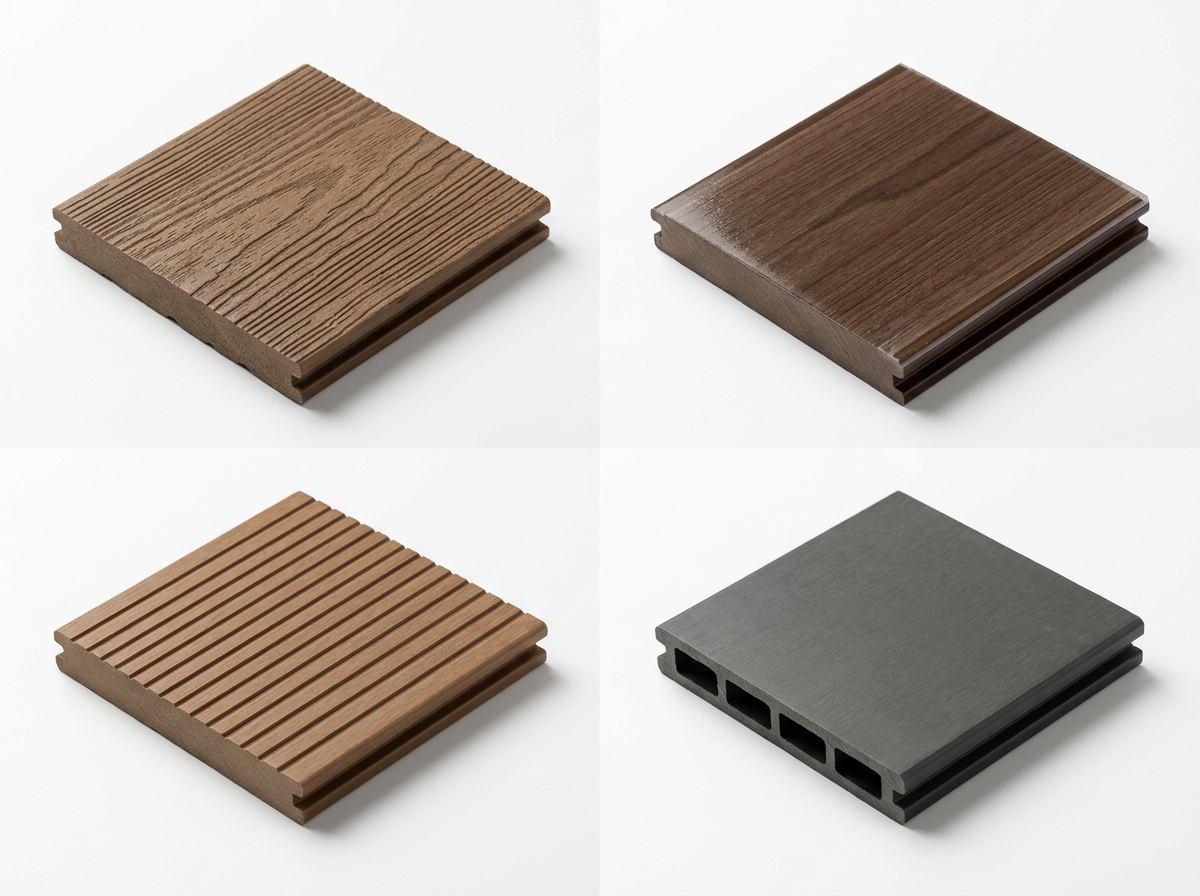



- Co-extrusion WPC decking is designed for better surface protection than conventional WPC, which helps in wet hospitality areas.
- Hotel poolside applications need slip resistance, drainage, and easy cleaning more than decorative looks alone.
- Lifecycle cost matters: lower repainting, lower sealing, and simpler maintenance often outweigh a higher initial material price.
- Texture, board thickness, joist spacing, and color stability all influence performance around pools.
- Project teams should verify sample performance, installation details, and compliance with relevant Outdoor Decking standards before purchase.
Co-extrusion WPC decking is often suitable for hotel poolside areas because it combines a protective outer cap with the dimensional stability and water resistance that outdoor commercial spaces need. In hospitality settings, surface safety and maintenance burden are usually more important than raw appearance alone. Outdoor walking surfaces are commonly evaluated against slip and durability requirements such as ASTM E303-22 for pendulum skid resistance and ISO 13006 for product classification logic in ceramic surfaces, while composite decking itself is often specified with reference to ASTM D7032-22 for performance and ISO 178 for flexural properties. If you are comparing outdoor finishes for guest circulation zones, you can also review the product range for WPC decking, co-extrusion WPC decking, and 3D embossed decking to match texture, cap protection, and design intent.
Why co-extrusion WPC decking fits hotel poolside use
Co-extrusion WPC decking fits hotel poolside use because the capped surface is built for repeated wetting, guest traffic, and easier cleaning.
Hotel pool decks are a demanding micro-environment. Water splashes onto the surface all day, sunscreen and beverage spills are common, barefoot traffic is constant, and cleaning crews need a finish that can be washed quickly without special coatings. Traditional softwood can absorb moisture, swell, stain, and require recurrent sealing. By contrast, co-extrusion WPC decking uses an outer protective layer to reduce surface contamination and improve color retention, which is especially valuable for commercial poolside zones where visual uniformity matters.
For a hotel operator, the key benefit is not only weather resistance but operational consistency. A surface that stays cleaner, dries faster, and needs fewer intensive treatments can reduce disruption around guest areas. That is why many commercial buyers now compare co-extrusion WPC decking with timber, stone, and ordinary hollow plastic boards rather than judging it as a decorative material only.
Hotel poolside performance factors that matter most
Hotel poolside performance depends on slip control, water management, heat behavior, and maintenance predictability.
The first question for any poolside project is safety under wet conditions. A deck that looks attractive in a showroom may still be unsuitable if it becomes slippery when wet. For that reason, procurement teams often ask for test data rather than marketing claims. The ASTM E303-22 pendulum method is widely used to assess skid resistance on walking surfaces, while contractors may also use project-specific wet slip evaluations and sample mockups to validate real-world performance.
Water management is the second factor. Pool decks should allow drainage between boards and beneath the substructure so that standing water does not sit under the surface for long periods. Co-extrusion WPC decking can perform well here because the capped layer reduces absorption, but the installation detail still matters. Correct joist spacing, ventilation, and edge clearance are essential.
Thermal comfort is the third factor. Darker colors may absorb more heat under strong sun, which matters in tropical and subtropical hotel resorts. Light- to medium-tone boards are often preferred near pools because they can feel more comfortable for barefoot traffic, though color selection should still be balanced against stain visibility and design intent.
| Poolside requirement | Why it matters | Typical project check | Numeric reference |
|---|---|---|---|
| Slip resistance | Reduces accident risk on wet surfaces | Pendulum or wet slip test | ASTM E303-22 |
| Flexural performance | Supports loads from guests and furniture | Material testing | ISO 178 |
| Decking performance | Helps compare composite boards in use | Product specification review | ASTM D7032-22 |
| Board stability | Limits warping and movement under heat and moisture | Sample inspection and installation review | Project dependent |
Co-extrusion WPC decking vs traditional timber for hotel pool decking
Co-extrusion WPC decking usually offers lower maintenance pressure than timber in hotel pool decking applications.
Hotels buy for uptime, not for theory. Timber can look beautiful, but poolside environments accelerate wear: moisture cycling, cleaning chemicals, UV exposure, and constant foot traffic all shorten service life. Even hardwoods that perform well outdoors generally need periodic cleaning, oiling, or refinishing to stay consistent. Co-extrusion WPC decking is attractive because the capped surface helps minimize that upkeep.
From an operations perspective, less maintenance means fewer guest-area closures. If a deck has to be sanded, resealed, or repaired during peak season, the indirect cost can exceed the material price difference. That is why lifecycle cost analysis matters more than initial board price alone.
| Factor | Traditional timber | Co-extrusion WPC decking | Operational meaning |
|---|---|---|---|
| Water resistance | Moderate to low without treatment | High due to capped surface | Better fit for splash zones |
| Maintenance frequency | Periodic sealing and refinishing | Usually simple washing | Less downtime |
| Stain resistance | Variable | Generally stronger | Better around drinks and sunscreen |
| Color stability | Can weather unevenly | More consistent under UV | Improved visual uniformity |
| Project risk | Higher if maintenance is neglected | Lower if installed correctly | More predictable performance |
Co-extrusion WPC decking vs stone and ceramic around pools
Co-extrusion WPC decking is often easier to retrofit and maintain than stone or ceramic in hotel poolside areas.
Stone and ceramic can be excellent when specified correctly, but they introduce different tradeoffs. Stone may become hot under direct sun, and some finishes need careful selection to avoid slick surfaces. Ceramic systems can deliver strong aesthetics, but substrate preparation, grout maintenance, and installation quality become critical. Composite decking avoids grout joints and can simplify the walking surface layout, especially in resort renovations where speed matters.
For design teams, the most practical advantage of co-extrusion WPC decking is continuity. Boards can be coordinated with fascia, steps, and surrounding landscape elements, giving a warmer hospitality appearance than hard mineral finishes while still meeting commercial durability expectations.
Technical details that influence hotel poolside success
Technical details decide whether co-extrusion WPC decking performs like a hospitality-grade surface or merely a decorative board.
The first detail is board construction. Co-extrusion products typically have a core and a protective outer shell. The shell is intended to improve resistance to staining, moisture uptake, and UV-related fading compared with uncoated boards. The second detail is surface texture. A 3D embossed finish can improve visual realism and help with traction, which is why 3D embossed decking is frequently evaluated for resort-style applications.
The third detail is thickness and support spacing. Thicker boards usually feel more rigid underfoot, but the actual system performance depends on joist span, fastener choice, and substrate preparation. The fourth detail is color. In poolside projects, lighter or medium tones often reduce surface heat, while darker boards may increase thermal gain even if they look premium in photos.
| Technical variable | Why it matters | Common project impact | Buyer action |
|---|---|---|---|
| Surface cap | Improves stain and weather resistance | Lower cleaning burden | Request cap composition details |
| Texture depth | Influences grip and appearance | Better barefoot comfort | Review physical samples |
| Board thickness | Affects stiffness and feel | Better load perception | Check span recommendations |
| Board color | Influences heat and design | Guest comfort and aesthetics | Compare sample boards under sun |
Maintenance expectations for hotel pool decking
Co-extrusion WPC decking is attractive for hotel pool decking because routine maintenance is usually simpler than coated wood systems.

A practical maintenance plan for hospitality decks should include sweeping, low-pressure washing, periodic inspection of fasteners, and immediate cleanup of oils or tanning lotion. Most hotel operators want a surface that can be restored quickly between guest cycles, not one that requires a specialist refinishing schedule. The capped surface helps here because it is designed to resist surface staining and reduce moisture-related degradation.
Still, low maintenance does not mean no maintenance. Debris left in grooves can trap moisture, and improper cleaning chemicals may dull the surface. A maintenance manager should confirm cleaning compatibility before the first installation. For projects with an engineering review process, sample cleaning trials are a useful pre-acceptance step.
- Rinse or sweep debris daily in high-traffic seasons.
- Use mild detergent and soft brushes for routine washing.
- Avoid harsh abrasives that can damage the texture.
- Inspect drainage and substructure after heavy rain or pool overflow.
- Keep replacement boards from the same production batch for future repairs.
How to specify co-extrusion WPC decking for a hotel project
Proper specification is the difference between a durable pool deck and a recurring maintenance problem.
When sourcing co-extrusion WPC decking, hotel buyers should ask for test reports, installation guidance, and sample boards from the same production line. A specification package should cover board dimensions, cap thickness, surface texture, color stability, fastening system, and the recommended joist spacing. If your team is comparing broader outdoor solutions, you may also review WPC cladding and WPC fence to maintain a consistent material family across the property.
The best procurement workflow is usually simple: define the performance target, request samples, test them under wet conditions, verify installation details, and then approve the final color and profile. That process lowers the risk of mismatched expectations between design, purchasing, and operations.
- Define the poolside exposure level: shade, full sun, salt air, or chlorinated splash.
- Ask for slip, UV, and dimensional stability data before ordering.
- Test two or three colors under real daylight, not only under showroom lighting.
- Confirm edge trim, drainage gaps, and stair details in the shop drawing stage.
- Keep spare boards for long-term replacement consistency.
Common mistakes when choosing pool decking
The most common mistake is choosing appearance before performance.
Many hospitality projects start with color swatches and finish photos, then discover later that the surface runs too hot, the texture is too smooth, or the maintenance expectations are unrealistic. Another frequent mistake is ignoring substructure design. Even a strong board can underperform if drainage is poor or if joists are spaced incorrectly. A third mistake is failing to align the finish with the hotel’s housekeeping capacity. If the cleaning team cannot maintain the surface with normal tools, the deck will deteriorate in appearance faster than expected.
- Do not approve a board from photos alone.
- Do not ignore wet slip behavior in actual pool conditions.
- Do not assume all WPC products perform the same.
- Do not overlook fastener quality and board expansion details.
- Do not skip a sample installation when the project is high value.
Is co-extrusion WPC decking the best choice for every hotel poolside?
Co-extrusion WPC decking is a strong choice for many hotel poolside areas, but it is not universally the best choice for every project.
It is usually a very good fit when the hotel wants a warm visual style, reduced maintenance, and dependable outdoor performance. It is especially attractive for resorts, boutique hotels, serviced apartments, and mixed-use hospitality projects where guest-facing aesthetics matter. However, if the project demands extremely high heat resistance, very specific non-combustible requirements, or a mineral-surface design language, other materials may still be more appropriate.
The decision becomes easier if you frame it around use case. For wet, high-traffic, guest-visible areas, co-extrusion WPC decking often balances comfort, appearance, and serviceability better than many alternatives. For a broader product review, a hotel buyer can compare PE composite fence and WPC decking to see how the same material family supports multiple outdoor zones.
FAQ about co-extrusion WPC decking for hotel poolside areas
1. Is co-extrusion WPC decking slippery when wet?
It can be suitable for wet areas if the surface texture and slip performance are properly specified and tested. Always request sample testing and real project verification.
2. Does co-extrusion WPC decking fade in sunlight?
It generally resists UV-related fading better than basic unprotected boards, but all exterior materials change over time. Ask for color stability data and compare samples under actual sunlight.
3. Can co-extrusion WPC decking handle chlorinated pool water?
It is commonly used in chlorinated environments, but the product should still be cleaned regularly and installed with proper drainage to avoid long-term surface buildup.
4. How often does hotel pool decking need maintenance?
Routine sweeping and washing are usually enough for normal use, with periodic inspection of the structure and fasteners. Maintenance frequency depends on traffic level, climate, and housekeeping standards.
5. Is co-extrusion WPC decking better than timber for resorts?
In many resort poolside projects, yes, because it usually needs less sealing and is more stable in moisture-prone conditions. Timber may still be chosen for certain architectural styles.
6. What color is best for poolside decking?
Medium or lighter tones are often preferred for comfort because they can reduce heat buildup compared with darker boards, especially in full-sun locations.
7. What should I request before placing a bulk order?
Request physical samples, dimensional drawings, installation instructions, test reports, and a matching batch plan for future replacements.