





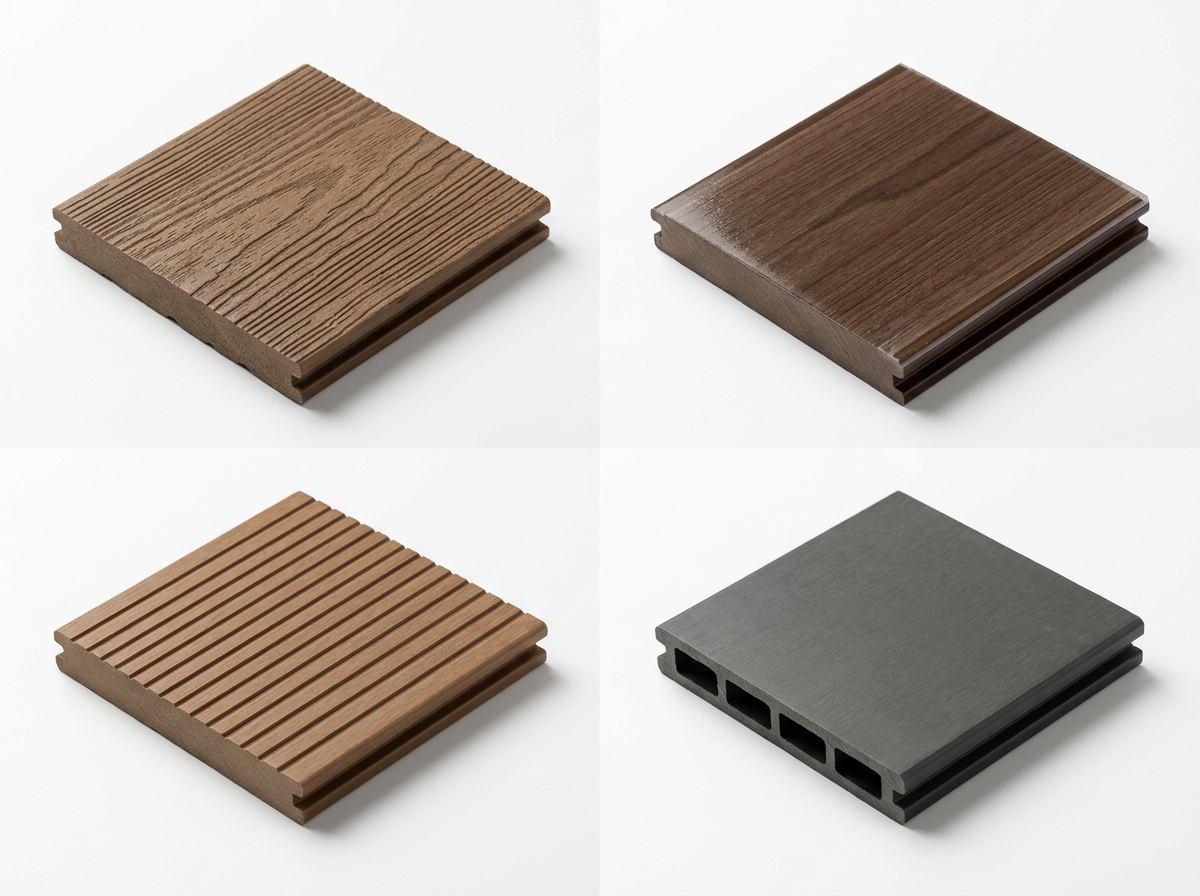



- High quality WPC cladding should be judged by test data, not catalog language.
- Co-extruded WPC usually offers better stain resistance and lower maintenance than classic WPC.
- China cladding factory selection should prioritize consistency, project references, and export documentation.
- Outdoor applications demand UV resistance, moisture control, and stable color performance.
- A reliable supplier should support samples, installation guidance, and lifecycle planning.
How to choose the top 10 high quality WPC cladding manufacturers in China starts with understanding what WPC cladding is: a wood-plastic composite made from wood flour or wood fiber and polymer resin, designed for exterior walls, landscape facades, and low-maintenance outdoor finishes. In real procurement, the buyer is not just buying a board; they are buying color stability, moisture resistance, install efficiency, and fewer repainting cycles over time. According to ASTM D7032, wood-plastic composite decking and cladding products should be evaluated for structural performance and durability-related properties, while exterior design decisions often also reference ISO 4892-2 for accelerated weathering and NIST traceability practices when verifying measurement systems.
What a high quality WPC cladding manufacturer in China should prove
A high quality WPC cladding manufacturer should prove performance with measurable evidence, not just product photos. Buyers in export markets, municipal projects, and landscape construction usually want a supplier that can support stable extrusion, realistic wood grain, reliable delivery, and clear installation documentation. If a factory cannot explain resin ratios, surface treatment, or testing methods, it is difficult to trust the product for facades that must survive sun, rain, temperature swings, and cleaning cycles.
The most important supplier signal is consistency. For exterior wall applications, panel thickness, profile geometry, and surface finish must remain stable across batches because even a small variation can create visual mismatch on a large facade. That is why serious buyers ask for batch samples, laboratory reports, and reference installations. A factory that can also supply WPC wall cladding plus matching accessories has a stronger chance of reducing onsite problems than a supplier selling only loose boards.
| Evaluation factor | What to ask for | Why it matters | Typical evidence |
|---|---|---|---|
| Material formulation | WPC ratio, polymer type, additives | Affects moisture resistance and durability | Technical datasheet |
| Surface system | Classic or co-extruded skin layer | Influences stain resistance and fading | Cross-section sample |
| Dimensional stability | Thickness tolerance and profile consistency | Controls installation fit | QC report |
| Outdoor performance | Weathering and absorption results | Predicts facade lifespan | Test report |
WPC cladding manufacturer comparison: classic WPC vs co-extruded WPC
Co-extruded WPC cladding is usually the better choice when the project needs stronger stain resistance and lower maintenance. The difference is not cosmetic only: classic WPC relies more on the base composite for exposed performance, while co-extruded products add a protective outer layer that helps shield the core from dirt, fading, and water-related surface wear. For commercial facades, hospitality projects, and garden architecture, that outer shell often lowers cleaning frequency and preserves appearance longer.
Classic WPC still makes sense in many cases, especially when budget is tighter or the project does not face severe exposure. But buyers should be honest about the environment. A shaded courtyard wall in a mild climate has different needs than a south-facing facade near a coastal zone. For higher exposure scenarios, co-extrusion is often the safer specification. If you are sourcing complete exterior systems, it helps to compare the cladding with matching WPC fence panels and WPC decking boards so the finish and maintenance strategy stay consistent across the site.
| Product type | Main advantage | Maintenance load | Best use case |
|---|---|---|---|
| Classic WPC cladding | Good value and natural look | Moderate | Residential facades, private gardens |
| Co-extruded WPC cladding | Better stain and fade resistance | Lower | Hotels, public buildings, premium exteriors |
| 3D embossed surface | More realistic wood texture | Moderate to low | Feature walls, landscape projects |
How to shortlist the top 10 high quality WPC cladding manufacturers in China
The best shortlist method is to rank suppliers by evidence, not by sales pitch. In practical B2B sourcing, the top 10 is rarely the ten largest factories; it is the ten factories that can reliably deliver the right profile, finish, documentation, and service for your project category. A buyer should screen for extrusion capacity, export experience, color consistency, sample lead time, and willingness to support technical questions after the sale.
- Check whether the factory specializes in exterior Wpc Products, not only indoor decorative panels.
- Request cross-section samples of the exact profile you plan to buy.
- Ask for test data on water absorption, UV exposure, and dimensional stability.
- Review real installed projects in facades, fences, and garden walls.
- Confirm packaging, container loading, and spare accessory supply.
- Compare installation guidance, clip systems, and fastening details.
- Verify whether the supplier can provide matching cladding, corner trims, and finishing profiles.
In the outdoor materials market, procurement teams often underestimate how much installation support affects total cost. A manufacturer that provides clear fixing spacing, expansion gap guidance, and cleaning instructions can save time onsite and reduce rework. That is especially important for overseas projects where labor cost is high and installation errors are expensive.
Technical data buyers should request from a China cladding factory
Technical data is the fastest way to separate a serious WPC cladding manufacturer from a trading-only seller. Buyers should ask for numbers that can be checked, such as density, thickness range, surface treatment, and relevant test standards. For exterior composite products, the ability to provide documentation aligned with recognized standards matters more than a polished brochure.
One useful reference is ASTM D7032, which covers performance requirements for wood-plastic composite decking and cladding. Another useful weathering reference is ISO 4892-2, which specifies xenon-arc lamp exposure methods for plastics. For measurement confidence, traceable instrumentation and calibrated gauges are consistent with NIST practices. In commercial procurement, these references help buyers compare products on objective grounds rather than appearance alone.
| Data item | Why it is requested | Typical buyer question | Documentation |
|---|---|---|---|
| Thickness tolerance | Ensures fit and visual consistency | How much can the profile vary? | QC sheet |
| Water absorption | Predicts outdoor durability | How does it behave in rain? | Lab report |
| Weathering exposure | Estimates color retention | How long before fade becomes visible? | Test summary |
| Fire response | Needed for project compliance | Does the product meet site rules? | Classification report |
Where WPC cladding performs best in real projects
WPC cladding performs best where the owner wants a warm wood look but needs better outdoor resilience than natural timber. Typical applications include villa facades, garden feature walls, balcony screens, resort buildings, commercial exteriors, and landscape renovation. The product is especially attractive in projects where repainting or anti-corrosion treatment would otherwise recur every few years.
For a residential courtyard, the main benefit is visual harmony with landscaping and lower upkeep. For a hotel or retail frontage, the benefit is a stable appearance that supports brand image without constant refinishing. For municipal landscape work, the benefit is repeatable supply and predictable installation. If your project also includes boundary systems, pairing the wall finish with WPC fence solutions can create a consistent exterior language across the site.
In coastal or high-humidity zones, buyers should pay extra attention to fastening detail, ventilation behind the cladding, and the quality of edge sealing. Moisture management is not only about the board itself; it is also about how the wall system breathes and drains. That is why a good manufacturer should explain both the profile and the installation method.
How to judge quality beyond the sample board
A sample board can look perfect even when mass production is inconsistent. The real quality test is whether the factory can repeat the same color, texture, and fit across large orders. In long exterior runs, variation becomes obvious immediately, especially under direct sunlight. That is why buyers should ask for photos of multiple pallets, not a single hand-picked panel.
Another important check is accessory compatibility. A factory that supplies only boards may leave you solving trim, corner, and fastening issues on site. A stronger supplier will help with full system planning, which is why many buyers prefer a factory that can support cladding plus related exterior lines such as WPC decking and matching finishing parts. System thinking reduces project risk.

- Inspect color uniformity across at least three samples.
- Ask how the factory controls raw material batches.
- Review edge cut quality and surface pore consistency.
- Confirm whether installation accessories are available.
- Request a packing and loading plan before placing order.
Lifecycle cost: why the cheapest manufacturer is often expensive later
The lowest quoted price is often not the lowest total cost. WPC cladding is usually purchased for lifecycle savings: fewer repainting cycles, less rot risk, and lower surface maintenance. In exterior work, small installation or quality issues can multiply into future costs, especially when access to the facade is difficult or labor is expensive. That is why a high quality manufacturer should be judged over the expected service period, not just the initial invoice.
Projects using low-maintenance exterior materials usually benefit most when the owner values appearance stability and reduced upkeep. For example, a commercial wall that stays visually consistent for years supports tenant perception and reduces recurring maintenance planning. When the product is part of a larger landscape package, the same logic applies to decks, fences, and screens. If you want to compare a full exterior package, review the supplier's cladding range alongside related systems so the maintenance profile is aligned from the start.
| Cost factor | Cheap supplier risk | High quality manufacturer benefit | Project impact |
|---|---|---|---|
| Color stability | Uneven fade | Better batch control | Cleaner facade appearance |
| Installation fit | Gaps or misalignment | Stable dimensions | Less rework |
| Surface wear | Early staining | Better protective layer | Lower cleaning cost |
| Support | Limited guidance | Technical documentation | Lower risk in export projects |
What export buyers should verify before placing an order
Export buyers should verify compliance, packing, lead time, and communication quality before they confirm a purchase order. In international procurement, a good product can still fail if the supplier does not understand container loading, labeling, pallet protection, or document preparation. Exterior panels are long, sometimes fragile at edges, and sensitive to compression if packaging is weak.
Ask the supplier how they handle sample confirmation, whether they can produce the same color across repeat orders, and whether they support OEM or project-specific dimensions. It also helps to confirm whether the factory has experience supplying WPC cladding to your target market, because climate and building practices vary. A supplier with export familiarity is more likely to anticipate issues before they become expensive.
- Confirm profile drawings and exact dimensions in writing.
- Request pre-production samples for color and texture approval.
- Check loading protection and carton labeling method.
- Ask for installation manual and maintenance instructions.
- Verify replacement policy for damage or mismatch.
Seven FAQ buyers ask before selecting a WPC cladding manufacturer in China
1. Is WPC cladding suitable for wet or humid climates?
Yes, WPC cladding is widely used in humid and rainy environments because it is designed to resist water absorption better than natural wood, but the wall system still needs proper ventilation and installation detail.
2. What is the difference between classic WPC and co-extruded WPC?
Classic WPC uses the composite body as the exposed surface, while co-extruded WPC adds a protective outer layer that usually improves stain resistance and color retention.
3. How do I know if a China cladding factory is truly high quality?
A high quality factory can provide test reports, stable samples, project photos, technical drawings, and clear installation guidance, not only promotional images.
4. Can WPC cladding be used for both walls and fences?
Yes, many project buyers use WPC cladding for facades and combine it with WPC fence systems for boundary treatment and visual continuity.
5. Does 3D embossing improve performance?
3D embossing mainly improves visual realism and surface feel, and it can also support slip resistance in some exterior applications, especially when used on decking rather than vertical walls.
6. What should I ask for before ordering samples?
Ask for exact dimensions, surface type, core composition, color code, and the test standards used for the product so you can compare one supplier to another fairly.
7. How long does WPC cladding usually last?
Service life depends on formulation, exposure, and maintenance, but the practical advantage of WPC is its lower upkeep burden compared with traditional wood in outdoor settings.
Choosing the top 10 high quality WPC cladding manufacturers in China is really about reducing risk: risk of color mismatch, risk of poor outdoor durability, risk of delayed shipments, and risk of expensive onsite rework. If a supplier can show technical depth, export reliability, and a complete exterior product ecosystem, they deserve a place on your shortlist. For buyers who want a unified outdoor solution, reviewing the supplier's WPC cladding, WPC decking, and WPC fence pages together is one of the simplest ways to judge whether the factory can support a complete project, not just sell individual boards.