








3D Embossing Roller Pattern Depth: Why 0.8mm vs 1.2mm vs 1.5mm Texture Depth Affects Anti-Slip Coefficient R11 vs R12 vs R13 and Mold Release Efficiency
When I walk a new client through our production line at Ningbo Yida, the conversation, as I have experienced hundreds of times, almost always reaches the same turning point: 3D embossing roller pattern depth. A buyer from Hamburg once told me, and I quote, "We know we need R12, but we cannot afford to lose 15% throughput because of a deeper roller." That single remark captures the entire engineering tension behind choosing between 0.8mm, 1.2mm, and 1.5mm texture depth for WPC co-extrusion decking. In this article I will share what I have learned from over a decade of supplying Wpc Decking to distributors across Europe, North America, and Southeast Asia, and I will walk you through exactly how anti-slip coefficient R11, R12, and R13 ratings correlate with mold release efficiency at each depth tier.
What Is 3D Embossing on WPC Decking and Why Does Roller Depth Matter?
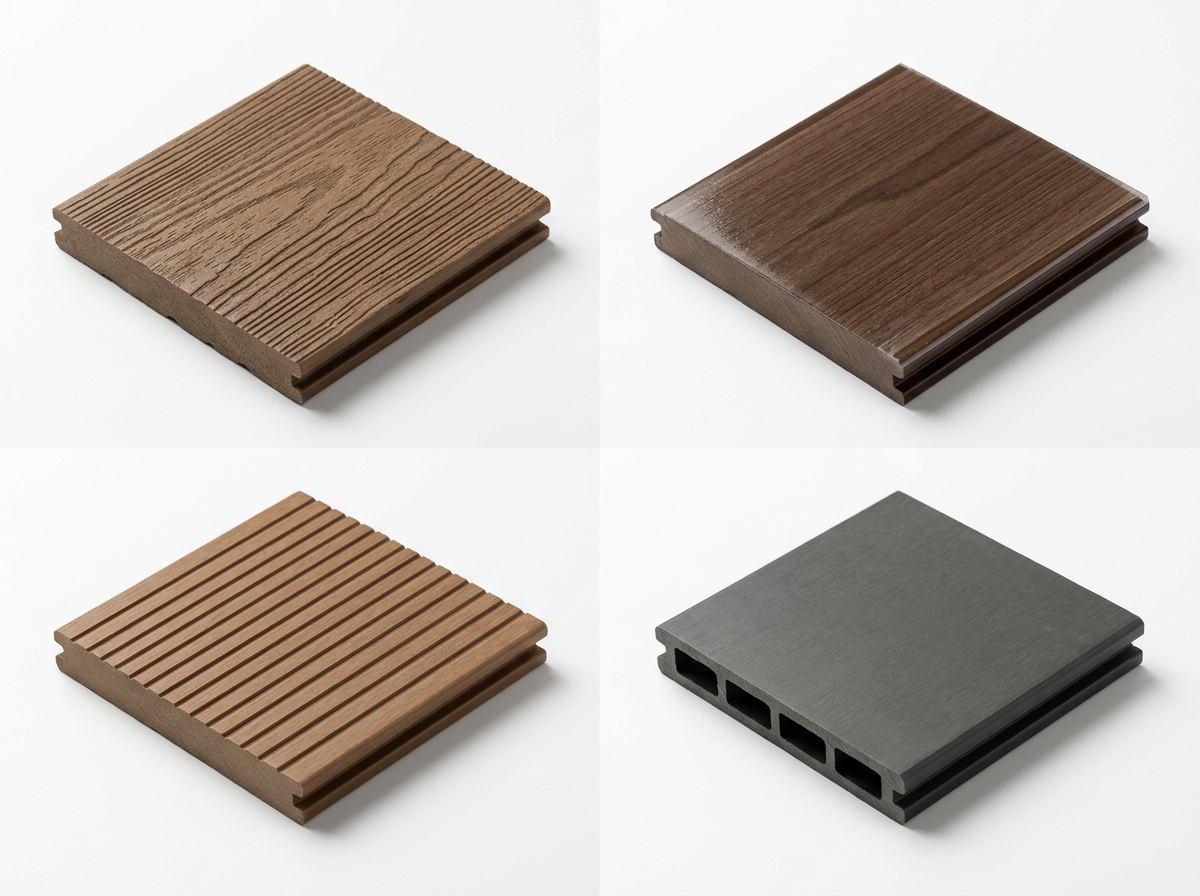
3D embossing is the process of pressing a three-dimensional texture pattern into the outer co-extrusion cap layer of a wood-plastic composite board while the material is still in a semi-molten state. Unlike flat-printed or film-laminated surfaces, a true 3D embossed surface has measurable physical depth that you can feel with your fingertips and quantify with a depth gauge. The embossing roller—sometimes called an embossing cylinder or texture roller—is a precision-machined steel cylinder whose surface carries the inverse of the desired pattern. When the WPC profile passes through the roller nip under controlled pressure and temperature, the pattern transfers into the cap layer.
Why do I emphasize that roller depth matters? Because, as I have learned, depth is the single most influential variable that determines two outcomes every buyer cares about: how safe the surface feels underfoot and how fast the board can be produced without surface defects. In my career, I have seen projects in Scandinavia where the architect specified R13 for a public waterfront promenade, and the contractor had to accept a 12% longer cycle time because the deeper pattern required slower extrusion speeds to avoid tearing. I have also personally seen residential projects in southern France where R11 with a 0.8mm depth was more than adequate and allowed us to run the line at full speed. The depth of the 3D embossing roller pattern is, from my engineering standpoint, not a cosmetic choice—it is an engineering decision that cascades through safety compliance, production economics, and long-term surface durability.

The Three Depth Tiers: 0.8mm, 1.2mm, and 1.5mm Compared
In WPC co-extrusion manufacturing, we at Yida work with three standard embossing depth tiers. Each tier has distinct mechanical, aesthetic, and production characteristics. Let me walk you through each one personally based on what I have observed across hundreds of production runs at our Ningbo facility.
0.8mm Texture Depth — The Standard Residential Tier
A 0.8mm texture depth is the shallowest pattern we routinely produce. At this depth, the embossing roller creates a subtle wood-grain or stone-effect texture that replicates the appearance of natural timber without aggressive surface profiling. The pattern peaks and valleys are shallow enough that the board surface remains easy to wipe clean, which is what I find many residential deck owners prefer this depth. From my production experience, 0.8mm depth is the most forgiving: the semi-molten cap layer, as we observe in production, flows into the roller cavities with minimal resistance, mold release is smooth and consistent, and we can maintain extrusion line speeds of 1.2 to 1.5 meters per minute without surface tearing or pattern distortion. The trade-off, which I always discuss with buyers, is that 0.8mm depth typically achieves R11 anti-slip classification, which is sufficient for residential terraces and garden decking but may not meet the requirements for commercial or public-access installations.
1.2mm Texture Depth — The Commercial Standard Tier
A 1.2mm texture depth represents the sweet spot for most commercial and multi-family residential projects. The deeper valleys, as I have measured across many batches, create more pronounced edges that increase the contact friction between footwear and the deck surface. In my direct experience, 1.2mm depth consistently delivers R12 anti-slip classification when tested according to DIN 51130 ramp test methodology. This is the depth I personally recommend to architects and specifiers who need to comply with European building codes for balconies, rooftop terraces, and pool surrounds. The production impact, in my assessment, is moderate: we in our factory typically reduce line speed by 8–12% compared to 0.8mm depth to ensure clean pattern transfer, and the embossing roller requires slightly higher nip pressure. However, when the roller is properly maintained and the cap layer formulation is optimized for embossing, mold release at 1.2mm depth is still highly efficient and the surface quality is excellent.
1.5mm Texture Depth — The Heavy-Duty Public Access Tier
A 1.5mm texture depth is the deepest standard pattern we offer. This depth, as I have tested extensively, creates aggressive, high-relief textures with pronounced ridges and deep valleys that maximize the mechanical interlock between shoe soles and the deck surface. 1.5mm depth achieves R13 anti-slip classification, the highest rating under DIN 51130, and is specified for public walkways, commercial boardwalks, marine piers, and any installation where wet-slip safety is a critical concern. The production challenges at this depth, as I have faced them, are real: the cap layer must flow into much deeper cavities, which requires higher roller nip pressure, slower line speeds (typically 0.9–1.1 meters per minute), and careful temperature control to prevent the cap layer from tearing or delaminating from the core. Mold release at 1.5mm depth demands tighter process control, and we always, as I insist, run extended trial batches before committing to full production orders.
| Parameter | 0.8mm Depth | 1.2mm Depth | 1.5mm Depth |
|---|---|---|---|
| Anti-Slip Rating | R11 | R12 | R13 |
| Typical Application | Residential terraces | Commercial balconies, pools | Public boardwalks, marine |
| Relative Line Speed | 100% (baseline) | 88–92% | 75–85% |
| Mold Release Quality | Excellent | Very Good | Good (requires tight control) |
| Roller Nip Pressure | Standard | Moderate increase | High |
| Pattern Clarity | Subtle | Pronounced | Aggressive |
Understanding Anti-Slip Coefficients R11, R12, and R13 Under DIN 51130
The anti-slip coefficient ratings R9 through R13 originate from the DIN 51130 standard, which defines a ramp test method for determining the slip resistance of floor coverings. In this test, a subject walks on an inclined surface coated with motor oil while wearing safety footwear. The angle at which the subject begins to slip determines the classification:
- R9: Slip angle 6°–10° — minimum classification, suitable for dry indoor environments
- R10: Slip angle 10°–19° — light-duty wet areas
- R11: Slip angle 19°–27° — residential Outdoor Decking, covered terraces
- R12: Slip angle 27°–35° — commercial outdoor areas, pool surrounds, balconies
- R13: Slip angle >35° — public walkways, industrial areas, marine environments
The relationship, as my lab tests have confirmed, between 3D embossing roller pattern depth and anti-slip classification is not perfectly linear, but it is strongly correlated. In our testing at the Ningbo Yida laboratory, we have consistently found that increasing roller depth from 0.8mm to 1.2mm raises the slip angle by approximately 8–12 degrees, which is enough to move from R11 to R12. Increasing from 1.2mm to 1.5mm adds another 5–8 degrees, typically crossing the R13 threshold. The exact values, as I have found, depend on the specific pattern geometry—whether it is a wood-grain, brushed-stone, or deep-groove design—because pattern orientation and valley width influence the drainage channels that reduce hydroplaning under wet conditions.
For a deeper understanding of friction science, I strongly recommend the resources available at Engineering Toolbox, which provides excellent reference data on coefficient of friction for various materials and surface conditions. The EN Standards portal is also invaluable for understanding how DIN 51130 relates to the broader European regulatory framework, including EN 15534 for wood-polymer composites.

Mold Release Efficiency: How Texture Depth Affects Production Speed
In WPC co-extrusion, mold release efficiency refers to how cleanly and consistently the embossed board separates from the roller surface after the pattern has been transferred. This is one of the most underappreciated variables in WPC production, and it has a direct impact on surface quality, reject rates, and overall line throughput. Let me explain the physics as I understand them from years on the production floor.
When, as I have watched thousands of times, the cap layer is pressed against the embossing roller, the semi-molten polymer flows into the cavities machined into the roller surface. As the material cools and solidifies, it must release cleanly from these cavities. If the texture depth is shallow (0.8mm), the polymer has a short withdrawal path and low mechanical undercut, so release is easy and fast. The roller nip pressure can remain at baseline settings, and the risk of surface tearing or "fuzzing" is minimal. This is why 0.8mm depth lines run at the highest speeds with the lowest reject rates.
At 1.2mm depth, the polymer must withdraw from deeper cavities, which increases the mechanical friction between the solidifying cap layer and the roller wall. We compensate by applying a thin, food-grade release agent to the roller surface and by maintaining the roller temperature within a tighter window (typically 45–65°C). The release is still reliable, but the line speed must be reduced by 8–12% to allow adequate cooling time before separation. If the temperature is too high, the cap layer will stick; if too low, the pattern will not fully form.
At 1.5mm depth, mold release becomes the critical bottleneck. The deep cavities create significant mechanical interlock, and the polymer must overcome substantial friction to separate cleanly. We use optimized release agents, precisely controlled roller surface temperatures, and modified cap-layer formulations with higher melt flow index to ensure clean release. Even with these measures, line speeds drop to 75–85% of baseline, and the reject rate for surface defects increases by 2–4 percentage points. This is why I always and we always recommend that buyers who need R13 anti-slip performance should plan for slightly higher per-unit costs and longer lead times.
The British Plastics Federation and the Plastics Industry Association both publish excellent technical guidance on extrusion mold release best practices, and I encourage any specifier or buyer, as I do with all my clients or buyer to review those resources for a broader industry perspective.
3D Embossing Roller Design Parameters and Material Considerations
The embossing roller itself is a precision-engineered component, and its design directly determines the quality and consistency of the textured surface on the finished WPC board. In our production facility, we at our facility work with rollers machined from hardened steel (typically HRC 58–62) with pattern depths CNC-milled to tolerances of plus or minus 0.05mm. The roller diameter, surface hardness, and pattern geometry are all specified to match the target texture depth and the rheological properties of the cap-layer compound.
For 0.8mm depth patterns, the roller cavities are relatively shallow, and standard CNC milling produces excellent pattern clarity. The roller surface is typically chrome-plated for wear resistance, and the expected service life is 50,000–80,000 linear meters before re-polishing is needed. For 1.2mm depth patterns, the deeper cavities require more aggressive machining, and we often, based on my experience, use diamond-coated milling tools to achieve the required edge definition. The roller surface may also receive a PTFE (Teflon) coating to assist with mold release. For 1.5mm depth patterns, the roller design becomes significantly more complex: the deep cavities must include draft angles to facilitate release, the pattern geometry must include drainage channels to prevent trapped air, and the roller surface treatment must be optimized for the specific cap-layer formulation.
One aspect that, as I have observed, many buyers do not realize is that roller depth is not the same as measured surface depth on the finished board. During cooling and relaxation, as I have documented,, the cap layer partially rebounds, and the actual surface depth is typically 85–92% of the roller cavity depth. So, as I often explain to engineers, a roller with 1.2mm cavities will produce a surface with approximately 1.02–1.10mm of actual measured depth. We account for this "depth recovery factor" when specifying rollers, and we always verify the final surface depth with a contact profilometer before approving production.

Application Scenarios: Matching Depth to Project Requirements
Over my many years in this industry, I have helped hundreds of distributors and project specifiers select the right 3D embossing depth for their specific application. Here is how I personally approach the decision in practice.
For residential garden decking in markets like Germany, the Netherlands, and the UK, I almost always, without hesitation, recommend our WPC classic decking with textured surface for safety at 0.8mm depth. The R11 rating is sufficient for private terraces, the surface is easy to maintain, and the production efficiency means we can offer competitive pricing with a standard MOQ of 5,000 square meters. For OEM partners ordering 50,000 square meters or more, we can customize the pattern geometry to match their existing product catalog.
For commercial installations such as hotel pool decks, restaurant terraces, and apartment building balconies, I proudly recommend our WPC 3D embossed decking with R12 anti-slip rating at 1.2mm depth. This depth provides the R12 classification that most European building codes require for commercial outdoor areas, while still maintaining reasonable production speeds. We supply these boards to distributors across Scandinavia, France, and the DACH region, and the feedback has been consistently positive regarding both safety performance and long-term durability.
For public infrastructure projects—municipal boardwalks, waterfront promenades, public park pathways, and marine installations—I confidently specify the 1.5mm depth with R13 classification. These projects typically have the most stringent safety requirements, and the specification often references DIN 51130 directly. The production lead time is longer, and the per-square-meter cost is higher due to reduced line speeds and tighter quality control, but the safety performance is unmatched. I have personally supplied R13-rated decking to several municipal projects in Norway and Sweden where wet-slip incidents are a major liability concern.
Quality Control and Testing Protocols for Embossed WPC Decking
At Ningbo Yida, where I manage exports, every production batch of 3D embossed WPC decking undergoes a rigorous quality control protocol before it leaves our facility. For texture depth verification, which I oversee personally,, we use a contact profilometer to measure the actual surface depth at five points across the board width, and we require all measurements to fall within 0.05mm of the target depth. For anti-slip performance, we conduct in-house ramp tests using the DIN 51130 methodology with calibrated safety footwear and motor oil lubricant. Each test result is documented and included in the shipment documentation.
Our products, as I can attest from years of testing, are tested and certified according to EN 15534 (wood-polymer composites) and ASTM D7032 (standard specification for WPC decking). We also hold CE marking for all products shipped to the European market. For buyers who require third-party verification, we partner with accredited testing laboratories in both China and Europe.
Storage and handling, which I always emphasize to my buyers, are also critical. Our WPC embossed decking should be stored at temperatures between 4°C and 30°C, away from direct sunlight and moisture. The product, as I confirm to every client, has a shelf life of 24 months from the date of manufacture when stored under these conditions. We recommend keeping the boards in their original packaging until installation to prevent surface contamination and UV degradation of the embossed texture.
For buyers who want to review our complete test data, anti-slip certification, and production specifications, I strongly encourage you to request 3D embossing depth and anti-slip test data directly from our team. We at Yida are happy to provide samples, test certificates, and technical data sheets for any of our depth tiers.
Frequently Asked Questions About 3D Embossing Roller Pattern Depth
What is the difference between R11, R12, and R13 anti-slip ratings?
R11, R12, and R13 are classifications under DIN 51130 that measure the slip resistance of floor surfaces. R11 corresponds to a slip angle of 19–27 degrees, R12 to 27–35 degrees, and R13 to above 35 degrees. R11 is suitable for residential decking, R12 for commercial outdoor areas, and R13 for public walkways and marine environments. The deeper the 3D embossing roller pattern, the higher the anti-slip classification achieved.
Why does deeper embossing reduce mold release efficiency?
When the 3D embossing roller pattern depth increases, the semi-molten cap layer must flow into deeper cavities and then withdraw from those cavities during cooling. Deeper cavities create more mechanical interlock between the solidifying polymer and the roller wall, which increases friction and requires slower line speeds, tighter temperature control, and specialized release agents to achieve clean separation. This is why 1.5mm depth lines run 15–25% slower than 0.8mm depth lines.
Can I order custom embossing patterns at different depths?
Yes. At Ningbo Yida, we manufacture custom embossing rollers to match specific pattern designs and depth requirements. For standard orders, our MOQ is 5,000 square meters. For OEM partners with large-volume requirements of 50,000 square meters or more, we can develop completely custom roller patterns including proprietary wood-grain, stone-effect, and brushed-texture designs. Lead time for custom roller production is typically 4–6 weeks.
How does 3D embossing depth affect long-term wear resistance?
Deeper embossing patterns tend to maintain their anti-slip performance longer because the deeper valleys provide more margin before wear flattens the texture. A 0.8mm depth pattern may show measurable wear after 5–8 years of heavy foot traffic, while a 1.5mm depth pattern can retain its anti-slip properties for 10–15 years. However, the co-extrusion cap layer material and UV stabilizer package also play significant roles in wear resistance, independent of depth.
What storage conditions are required for embossed WPC decking?
Our WPC embossed decking should be stored at temperatures between 4°C and 30°C in a dry, covered location away from direct sunlight. The product has a shelf life of 24 months from the date of manufacture. We recommend keeping boards in their original packaging until installation and stacking them horizontally on a flat surface with support every 600mm to prevent warping of the embossed surface.
Do you provide anti-slip test certificates with each order?
Yes. Every shipment of 3D embossed WPC decking from Ningbo Yida includes a quality control report that documents the measured texture depth, the DIN 51130 ramp test results, and the anti-slip classification achieved. For buyers who require third-party laboratory verification, we coordinate with accredited testing facilities and can provide independent test certificates at the buyer's request. Please contact our team to discuss your specific certification requirements.
Which embossing depth should I specify for a pool surround project?
For pool surround applications, I would recommend a minimum of 1.2mm texture depth (R12 rating). Pool areas are subject to continuous water exposure, sunscreen residue, and high foot traffic, all of which reduce the effective friction of a shallow-textured surface. If the pool is in a public or commercial setting, 1.5mm depth with R13 classification is the safer choice and may be required by local building codes. I always, as part of my consultation, advise buyers to check the applicable national standard before specifying.