





Why 3D Embossed WPC Decking Is the Preferred Choice for Hotel and Resort Landscape Projects — A Co-Extrusion Composite Flooring Specification Perspective
TL;DR — Why 3D Embossed WPC Decking Wins for Hotel and Resort Projects
- 3D embossing creates depth variation mimicking natural wood grain, which lifts the slip resistance from R10 (standard WPC) to R11/R12 when wet.
- 15-year residential / 10-year commercial warranty against color fade (Delta E > 3.0) and structural degradation.
- MOQ: 500 m² stock colors / 1,000 m² custom colors / 2,000 m² custom texture.
- Higher upfront cost than natural wood (30-50% premium), but lower total cost of ownership over 10-20 year maintenance horizon.
Yida WPC's YD140S25 3D embossed co-extrusion decking is the reference product for hotel pool decks, resort walkways, and marina applications in tropical climates.
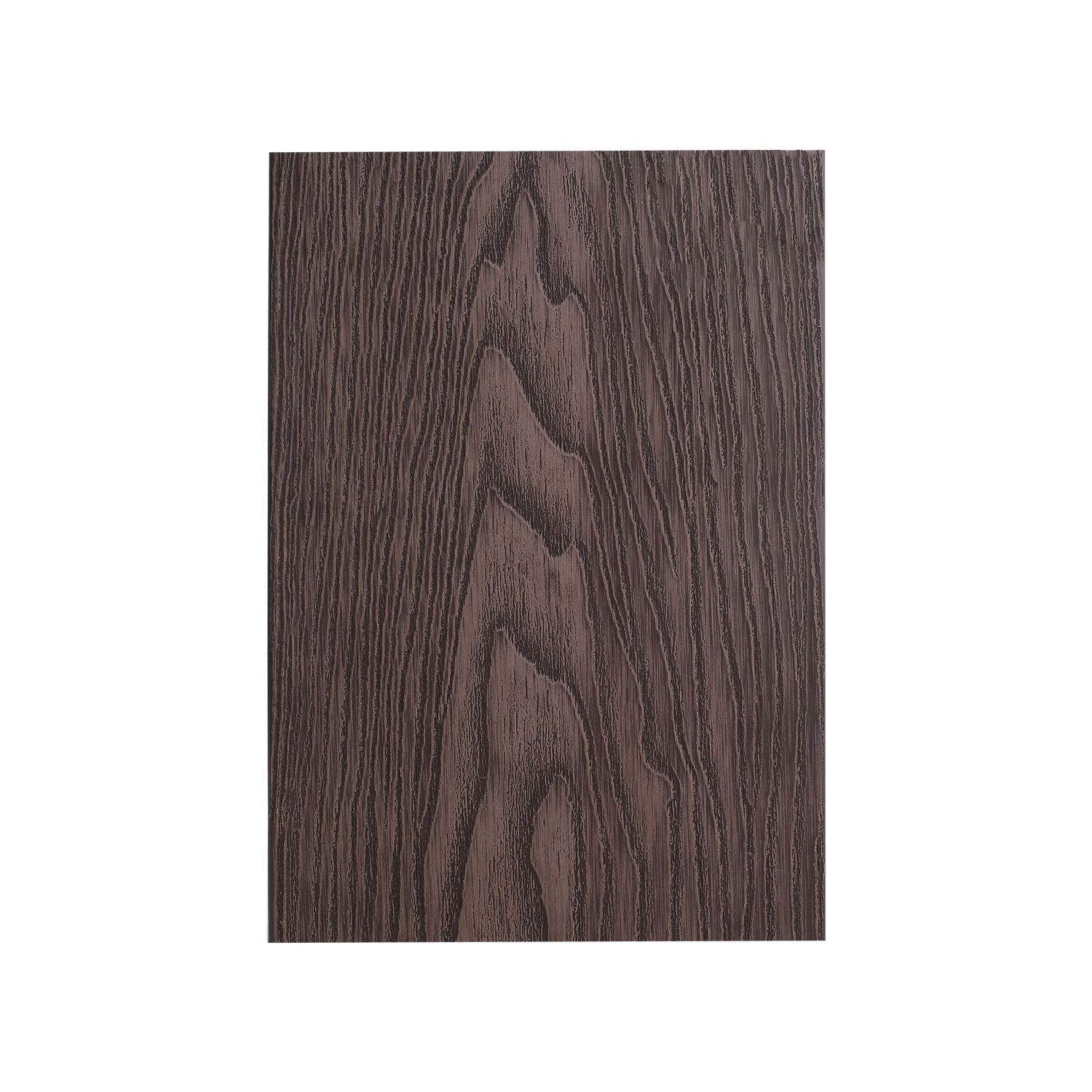
Why 3D Embossing Is the Defining Feature for Hospitality Decking
The first specification decision for a hotel or resort landscape project is whether to specify a standard Wpc Decking product or a 3D embossed WPC decking product.The two product types use the same base material (wood-plastic composite with a polymer cap layer), but the surface texture is fundamentally different, and the surface texture is the feature that drives the slip resistance, the aesthetic, and the maintenance profile.
Standard WPC decking has a flat or shallow texture that does not capture the depth variation of natural wood. The surface is smooth to the touch, and the wood grain pattern is printed or shallow-embossed into the polymer cap layer. The slip resistance of a standard WPC surface is typically R10 on the German DIN 51130 ramp test, which is acceptable for dry applications but is borderline for wet barefoot traffic.
3D embossed WPC decking has a three-dimensional surface texture that mimics the grain pattern of natural wood, including the depth variation between the early wood and late wood growth rings. The 3D embossing is achieved during the co-extrusion process, where a polymer cap layer is applied to the surface of the WPC core with a textured roller that creates the depth variation. The slip resistance of a 3D embossed surface is typically R11 or R12 on the DIN 51130 ramp test, which is sufficient for hotel pool decks, resort walkways, and marina applications.
Step 1: Match the Slip Resistance to the Application Environment
The slip resistance is the first specification to lock down, because the slip resistance determines the application environment where the decking can be used. For hotel pool decks, resort walkways, and marina applications, the slip resistance requirement is R11 or higher, which means 3D embossed WPC decking is required. For hotel balcony decking, restaurant outdoor flooring, and residential patio applications, the slip resistance requirement is R10, which means standard WPC decking is acceptable.
For barefoot traffic (pool decks, changing rooms, shower rooms), the slip resistance requirement is even higher, with the DIN 51097 barefoot ramp test specifying a class B or class C rating (depending on the slope angle). 3D embossed WPC decking typically meets class B (slope angle 18 to 24 degrees), which is sufficient for most pool deck and changing room applications.
For high-traffic commercial applications (resort lobby walkways, hotel entrance flooring, restaurant patio flooring), the slip resistance requirement is R11 with a higher abrasion resistance requirement (AC4 or AC5 on the EN 13329 standard). 3D embossed WPC decking for commercial applications is typically rated AC4, which is sufficient for the high-traffic commercial environment.
Step 2: Match the UV Resistance to the Climate
The UV resistance is the second specification to lock down, because the UV resistance determines the color fade and the structural degradation over the service life. The UV resistance of 3D embossed WPC decking in tropical climates is typically 8 to 15 years before visible color fade (Delta E greater than 3.0) and 15 to 25 years before structural degradation.
The UV resistance is provided by the polymer cap layer, which contains UV stabilizers (typically HALS — hindered amine light stabilizers — and UV absorbers such as benzophenone or benzotriazole) that absorb the UV radiation before it reaches the WPC core. The cap layer is typically 0.5 to 1.0 mm thick, which is sufficient to provide the UV protection for the 15 to 25 year service life.
For tropical climates (Southeast Asia, Middle East, Caribbean, Central America, equatorial Africa), the UV exposure is significantly higher than temperate climates, which accelerates the color fade and the structural degradation. Yida WPC's YD140S25 is specifically formulated for tropical climate UV exposure, with a higher loading of HALS and UV absorbers than the standard formulation for temperate climates.
Step 3: Match the Color and the Surface Texture to the Project Aesthetic
The color and the surface texture are the third specifications to lock down, because the color and the texture determine the aesthetic fit with the project design. The standard 3D embossed WPC colors are cedar, walnut, teak, and grey, which cover the most common hospitality landscape aesthetics. Custom colors are available with a 1,000 square meter MOQ and a 30 to 45 day lead time.
The standard surface texture is the 3D wood grain pattern, which mimics the grain pattern of natural cedar, walnut, or teak. Custom surface textures (slate, brushed, sanded) are available with a 2,000 square meter MOQ and a 45 to 60 day lead time, which is the minimum that justifies the custom roller setup.
For hotel projects with a specific design intent (e.g., a tropical resort with a bamboo aesthetic, a Mediterranean resort with a terracotta aesthetic), the color and the surface texture can be customized to match the design intent. The customization is typically done as a separate SKU with its own MOQ and lead time, which adds complexity to the order but provides the design differentiation that the project requires.
Step 4: Lock the Certification Package for the Destination Market
The certification requirement is the fourth specification to lock down. For European projects, the EN 15534 standard is the required certification for WPC decking. The EN 15534 standard covers the mechanical performance (bending strength, modulus of elasticity, impact resistance), the durability (UV resistance, water absorption, freeze-thaw resistance), and the safety (slip resistance, fire rating). For North American projects, the ASTM D7032 standard is the equivalent certification, with the additional requirement of the CCRR-0144 evaluation report from an accredited certification body (ICC-ES, IAPMO, or equivalent).
For fire-rated applications (hotel balcony decking, multi-family residential decking), the fire rating requirement is typically Bfl-s1 on the EN 13501-1 standard (European) or Class C on the ASTM E84 standard (North American). The fire-rated WPC decking requires a fire retardant additive in the polymer cap layer, which adds 10 to 20 percent to the product cost.
Yida WPC's YD140S25 carries the EN 15534 certification as standard, with optional ASTM D7032 + CCRR-0144 for the North American market and Bfl-s1 fire rating for the European fire-rated applications. The certification cost is included in the unit price for EN 15534 and is an add-on cost for the ASTM D7032 and Bfl-s1 certifications.
How Yida WPC Supports the First-Time Hotel Project Buyer
For first-time hotel project buyers, Yida WPC provides five items as standard: (1) a sample kit with the most common colors and surface textures (typically 5 to 8 sample pieces), (2) the YD140S25 technical data sheet with the mechanical performance, the durability, and the slip resistance specifications, (3) a reference list of 3 to 5 existing hotel or resort projects in the buyer's target market, (4) a factory audit video or a third-party audit report (SGS, Bureau Veritas, TUV), and (5) a written warranty commitment that covers the color fade and the structural degradation over the 15-year residential or 10-year commercial warranty period.
The sample kit is shipped within 5 to 7 days of the buyer's confirmation, with the freight cost prepaid by Yida WPC for sample orders. The sample kit is typically sufficient for the hotel design team to evaluate the aesthetic and the slip resistance on the project site, and for the hotel procurement team to evaluate the price and the lead time against the project budget.
For large hotel projects (more than 5,000 square meters of decking), Yida WPC offers a project-based pricing structure that includes volume discount, custom color support (above 1,000 square meters per color), and on-site technical guidance for the installation. The project-based pricing is documented in a project quotation that is valid for 30 days, which gives the buyer time to finalize the project budget and to secure the project financing.
Frequently Asked Questions on 3D Embossed WPC Decking for Hotel and Resort Projects
1. What is 3D embossed WPC decking and how is it different from standard WPC decking?
3D embossed WPC decking is a wood-plastic composite decking product with a three-dimensional surface texture that mimics the grain pattern of natural wood, including the depth variation between the early wood and late wood growth rings. Standard WPC decking has a flat or shallow texture that does not capture the depth variation of natural wood. The 3D embossing is achieved during the co-extrusion process, where a polymer cap layer is applied to the surface of the WPC core with a textured roller that creates the depth variation. The 3D embossed surface is more slip-resistant than the standard flat surface, particularly when wet, which is why 3D embossed WPC decking is the preferred choice for hotel pool decks, resort walkways, and marina applications.
2. What is the slip resistance rating of 3D embossed WPC decking when wet?
The slip resistance rating of 3D embossed WPC decking when wet is typically R11 or R12 on the German DIN 51130 ramp test, which corresponds to a coefficient of friction (COF) of 0.45 to 0.60 on the ASTM D2047 test. The R11/R12 rating is sufficient for hotel pool decks, resort walkways, and marina applications, where the barefoot traffic requires a non-slip surface even when wet. Standard flat WPC decking typically rates R10 or lower, which is acceptable for dry applications but is borderline for wet barefoot traffic. The 3D embossing is the key feature that lifts the slip resistance from R10 to R11/R12.
3. What is the UV resistance of 3D embossed WPC decking in tropical climates?
The UV resistance of 3D embossed WPC decking in tropical climates is typically 8 to 15 years before visible color fade (Delta E greater than 3.0) and 15 to 25 years before structural degradation. The UV resistance is provided by the polymer cap layer, which contains UV stabilizers (typically HALS and UV absorbers) that absorb the UV radiation before it reaches the WPC core. Yida WPC's YD140S25 3D embossed decking carries a 15-year limited warranty for residential applications and a 10-year limited warranty for commercial applications, with the warranty covering both color fade and structural degradation.
4. What is the typical MOQ for a 3D embossed WPC decking order?
The typical MOQ for a 3D embossed WPC decking order is 500 square meters for the standard colors (cedar, walnut, teak, grey) and 1,000 square meters for custom colors. The MOQ for custom surface textures (beyond the standard 3D wood grain) is 2,000 square meters, which is the minimum that justifies the custom roller setup. Yida WPC supports smaller trial orders (200 square meters) for new market entries, with the price premium of 10 to 20 percent over the standard MOQ pricing. The MOQ is per SKU, and a typical hotel project includes 3 to 5 SKUs (different colors and lengths), which means the total order MOQ is 1,500 to 2,500 square meters.
5. How does 3D embossed WPC decking compare to natural wood decking for hotel projects?
3D embossed WPC decking has three advantages over natural wood decking for hotel projects: (1) lower maintenance, because WPC does not require annual staining, sealing, or painting, (2) better slip resistance when wet, because the 3D embossed surface provides a higher coefficient of friction than smooth natural wood, and (3) better dimensional stability, because WPC does not expand and contract with humidity changes like natural wood. The two disadvantages are (1) higher upfront cost (WPC is typically 30 to 50 percent more expensive than natural wood on a per-square-meter basis) and (2) different aesthetic, because the 3D embossed surface, while realistic, is not identical to natural wood grain. For hotel projects with a 10 to 20 year maintenance budget horizon, WPC is typically the lower total cost of ownership despite the higher upfront cost.
6. What is the lead time for a 3D embossed WPC decking order?
The lead time for a 3D embossed WPC decking order is 15 to 25 days for stock colors with the buyer's brand label and packaging, and 30 to 45 days for custom colors. The lead time for a fully custom profile (new cross-section, new length, new surface texture beyond the standard 3D wood grain) is 45 to 60 days, which includes 15 to 20 days for the mold design and manufacturing, 10 to 15 days for the mold trial and sample approval, and 20 to 25 days for the production run. Yida WPC's lead times are confirmed at the order acceptance stage, with a written commitment that includes a delay penalty if the lead time is exceeded by more than 10 days.
How Yida WPC's Installation Support Reduces Hotel Project Risk
Hotel and resort landscape projects typically have a tight installation schedule that is driven by the hotel opening date, which is often contractually committed to the hotel brand and the tour operator. Yida WPC's installation support program is designed to reduce the installation risk and to keep the project on schedule. The program includes four components: (1) a pre-installation site visit by a Yida WPC technical engineer (for projects above 5,000 square meters), (2) an installation manual in the buyer's language with step-by-step photographic documentation, (3) a video walkthrough of the installation procedure that covers the substructure preparation, the deck board installation, the trim installation, and the final inspection, and (4) a post-installation inspection by the Yida WPC technical engineer (remote or on-site, depending on the project size).
The pre-installation site visit is particularly valuable for hotel projects with a complex site geometry (multi-level decks, curved walkways, integration with pool coping and planters). The Yida WPC technical engineer reviews the site geometry, confirms the material quantity, identifies any site-specific installation challenges (e.g., uneven substructure, drainage issues), and provides a written installation plan that the local installation crew can follow. The site visit typically takes 1 to 2 days and is included in the project quotation.
For hotel projects that use a local installation crew (which is the typical case for international hotel projects), the installation manual and the video walkthrough are the primary training tools. The installation manual is available in English, Spanish, French, Arabic, and Mandarin, and the video walkthrough is available with subtitles in the same languages. The installation training typically takes 2 to 4 hours per crew, and the Yida WPC technical engineer is available for remote support during the installation via WhatsApp or WeChat.
For hotel projects that require a Yida WPC on-site installation engineer (typically for projects above 10,000 square meters or for projects with a particularly tight installation schedule), the engineer travels to the project site and supervises the installation crew for the duration of the installation. The on-site engineer fee is quoted separately from the material quotation, and the typical fee is 200 to 300 USD per day plus travel and accommodation.